
Table of Contents
- Luxury Car Interior Trim Kits vs Vinyl Wraps: The Core Differences
- Head-to-Head Comparison: Cost, Durability, Fit, and Reversibility
- Car Interior Vinyl Wrap: Materials, Finishes, and What They Suit
- DIY Car Interior Trim Wrap: A Step-by-Step Reality Check
- Interior Vinyl Wrap Durability: How Long It Lasts and What Shortens It
- Interior Wrap Installation Cost: What You Pay For and Where to Save
- Vehicle Compatibility and Fit: Getting the Right Match First Time
- Conclusion: Choosing the Right Interior Upgrade for Your Car
- Frequently Asked Questions
Last Updated: October 14, 2026
Luxury Car Interior Trim Kits vs Vinyl Wraps: The Core Differences
The choice between luxury car interior trim kits vs vinyl wraps comes down to one question: do you want to replace your trim or cover it?
Customers constantly weigh a permanent upgrade against a reversible refresh. One changes the part. The other changes the look.
Here's what most guides get wrong: they treat these as competing versions of the same product. They aren't. A trim kit is a replacement component built for a specific vehicle.
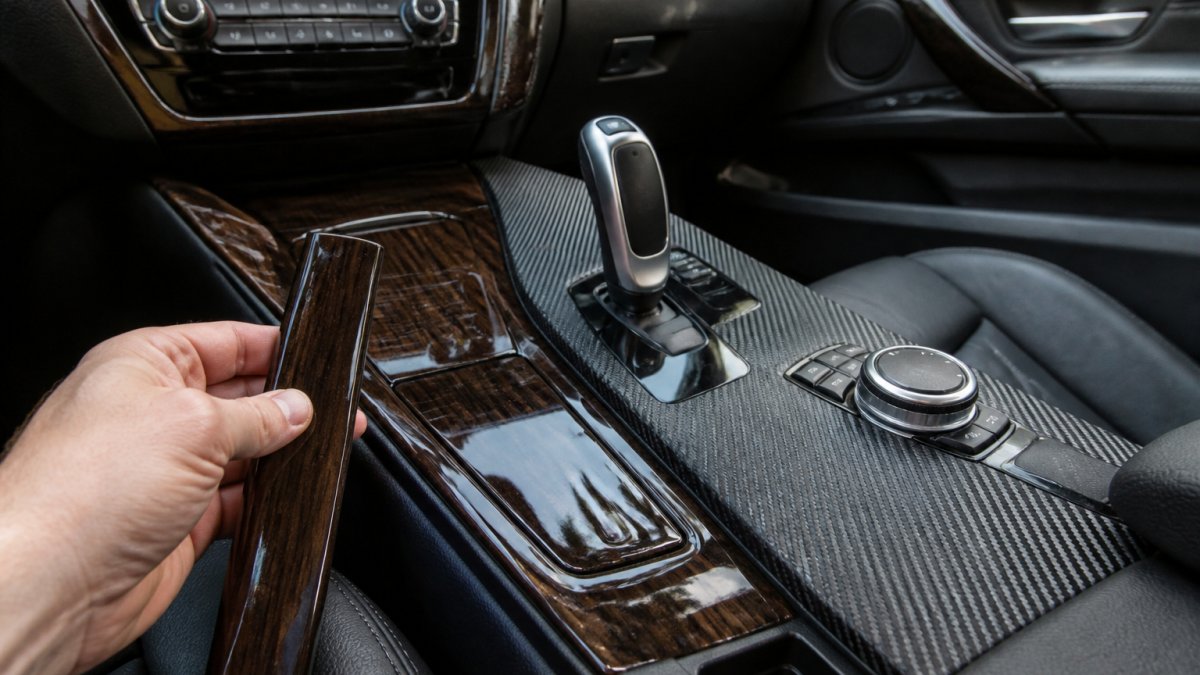
Interior trim kits are pre-formed replacement panels, often in wood-look, carbon-fiber-look, or painted finishes, designed to fit specific makes and models. Vinyl wrap is a pressure-sensitive adhesive film that covers existing trim without removing it.
Below, we'll break down cost, durability, fit, and reversibility so you can pick the right path for your car.
Head-to-Head Comparison: Cost, Durability, Fit, and Reversibility
Trim kits win on fit and finish; vinyl wraps win on price and reversibility. That's the honest summary.
| Factor | Luxury Trim Kit | Vinyl Wrap |
|---|---|---|
| What it is | Replacement panels or overlays built for a specific model | Adhesive film applied over existing trim |
| Material | ABS, polyurethane, real wood veneer, aluminum, or carbon-fiber composite depending on the kit | Cast or calendered PVC film with pressure-sensitive adhesive |
| Fit | Vehicle-specific; depends on correct year, trim level, and piece shape | Trimmed on site; conforms to curves but struggles with deep recesses and tight seams |
| Finish consistency | Factory-matched grain, gloss level, and color across pieces | Consistent within a roll, but can vary between batches and across complex curves |
| Reversibility | Original trim removed; reinstallation is difficult and may require new clips | Peel-off in most cases; factory trim remains intact underneath |
| Risk to factory trim | Clips, tabs, and surrounding panels can break during removal | Adhesive residue possible; risk rises on aged, porous, or previously repaired surfaces |
| Durability | Years with care; replacement panels resist wear better on high-touch areas | Depends on film grade, prep, and environment; edges and high-contact zones fail first |
| Best for | Keepers, show cars, and builds where fit and finish are the priority | Lease returns, short-term refreshes, and accent pieces |
The reversibility point matters more than people expect. A wrap leaves your factory trim untouched underneath, so you can return a leased vehicle to stock. A trim kit is a commitment.
Fit is the other quiet differentiator. A trim kit is only as good as its vehicle matching. Get the model year and trim level right, and it drops in. Get it wrong, and you're returning parts.
One more distinction worth stating plainly: these are not competing versions of the same product. A trim kit is a replacement component built for a specific vehicle. A vinyl wrap is a cosmetic layer that conforms to whatever surface it's applied to. Confusing the two leads to bad decisions, especially on fit and long-term value.
Car Interior Vinyl Wrap: Materials, Finishes, and What They Suit
Material choice decides how a car interior vinyl wrap looks and lasts. Two families dominate: cast vinyl and calendered vinyl. Cast film is thinner, conforms to curves and complex shapes, and holds up better over time. Calendered film is thicker and cheaper, but it struggles on tight curves and tends to lift at edges.
Finishes change the whole character of a cabin:
- Gloss finish mirrors light and reads as premium, but shows fingerprints and dust.
- Satin finish sits between gloss and matte, hiding smudges while keeping depth.
- Matte finish looks modern and understated, though it can scuff visibly.
- Wood-look finish suits classic and luxury cabins, especially dashboard trim and door trim.
- Carbon fiber appeals to performance-minded owners.
- Textured film adds grip-like feel and hides imperfections.
- Color-shift film changes hue with angle, a bold choice for accent pieces.
For most interiors, satin and textured films age best. High-gloss films on a center console take a beating from rings, keys, and cups.
DIY Car Interior Trim Wrap: A Step-by-Step Reality Check
A DIY car interior trim wrap is doable, but only if you accept the prep work. Skipping prep is the number one reason wraps fail. Here's the honest sequence.
Total Time: 3-5 hours for a first-timer on a full interior set Difficulty: Moderate
- Remove the trim pieces you plan to wrap, or mask surrounding areas carefully.
- Clean every surface with isopropyl alcohol to strip oils and silicone.
- Dry-fit the film before peeling any backing.
- Apply with a squeegee, working from the center outward to push out air.
- Use a heat gun or hairdryer on curves so the film stretches without tearing.
- Trim edges with a sharp blade, then tuck them behind panel gaps.
- Reheat edges to set the adhesive and prevent lifting.
Expected Result: A tight, bubble-free finish that survives daily use if you prepped properly.
A common mistake is wrapping over a dirty or greasy surface. The film looks fine for a week, then lifts at the corners. Another is over-stretching on tight curves, which thins the film and causes it to fail early.
Interior Vinyl Wrap Durability: How Long It Lasts and What Shortens It
Interior vinyl wrap durability depends far more on prep and environment than on the film alone. A well-applied wrap on a garaged car can last several years. The same film on a sun-baked dashboard can fail much sooner.
What shortens lifespan:
- UV exposure through the windshield, which dries and fades film.
- Heat cycling from summer sun and cold winters, which stresses adhesive.
- Abrasion from rings, keys, and cups on high-touch surfaces.
- Poor surface preparation, which is the biggest controllable factor.
- Cheap calendered film on complex curves, which lifts at edges.
Driving habits play a role too. A commuter who parks outdoors daily puts more stress on a wrap than someone who garages their car. If your dashboard trim sits in direct sun, expect a shorter run regardless of film quality.
Interior Wrap Installation Cost: What You Pay For and Where to Save
Interior wrap installation cost splits into two parts: the film and the labor. A professional installer charges for time, skill, and the risk they take on your trim. A DIY job trades that labor cost for your own hours and the chance of a redo. For a luxury trim kit, cost tracks the make and model, the finish you select, and how many pieces the kit replaces.
The following pattern often holds across both paths:
- Material cost: Vinyl film is generally the lower material cost per square foot. Trim kits cost more per piece because they are molded or finished for a specific vehicle.
- Labor cost: Wrap labor is usually quoted by piece or by hour, and complex consoles take longer than flat door strips. Trim kit installation is often simpler per piece because the parts are pre-formed, but removal of factory trim adds time and risk.
- Replacement cost: If a wrapped piece fails, you typically re-wrap that piece. If a trim kit piece is damaged, you usually replace the individual panel if the kit is sold piecemeal, which not all kits are.
- Ownership value: Over a three-to-five-year hold, a trim kit's higher upfront cost can spread across more years of use. A wrap's lower upfront cost can be the better value on a lease or short hold.
Where you save on a wrap:
- Wrapping only accent pieces instead of the full interior.
- Choosing satin or textured film over specialty finishes.
- Doing the removal and cleaning yourself before a pro applies the film.
Where you save on a trim kit:
- Buying a kit that covers only the pieces you actually want to change.
- Choosing a painted or composite finish over real wood veneer or carbon-fiber composite.
- Confirming the kit includes new clips and hardware so you don't pay twice.
Where you shouldn't cut corners on either path: film quality, surface preparation, and correct vehicle matching. Cheap film on a poorly prepped surface costs more in the long run because you'll redo it. A trim kit ordered for the wrong trim level costs more because returns and restocking fees add up.
Pricing varies by vehicle, film choice, kit coverage, and how much trim you want covered, so we recommend checking current options on our site rather than guessing at a number. Neither path has a single universal price, and the right comparison is always total installed cost against how long you plan to keep the car.
Vehicle Compatibility and Fit: Getting the Right Match First Time
Vehicle compatibility is where trim kits and wraps diverge hardest. A trim kit is built for a specific model, so fit is the whole point. Get the model year and trim level right, and it drops in. Get it wrong, and you're returning parts.
A wrap sidesteps fit issues because it conforms to whatever surface exists. But it still demands attention to curves, recesses, and panel gaps. A wrap on a complex console takes more skill than a flat door strip.
Before you order anything, confirm:
- Exact make, model, and year.
- Trim level, since interiors differ within the same model.
- Whether the piece is a full replacement or an overlay.
- Return terms in case fit isn't right.
We keep compatibility details on our product pages so you can check before you buy. If you're unsure, ask first. A two-minute question beats a return.
Conclusion: Choosing the Right Interior Upgrade for Your Car
The real challenge isn't picking a side, it's matching the method to your situation. Lease or short-term owner? Wrap it and keep your factory trim intact. Long-term build or show car? A trim kit gives you the finish and fit a film can't replicate. And if you want a curated starting point, Munk'Goods offers a dedicated range of car accessories and interior upgrades to enhance your driving experience, with compatibility details and a curated selection rather than a catalog you have to dig through.
Get started with Munk'Goods and find the interior upgrade that fits your car and your plans.
Frequently Asked Questions
Are interior trim kits better than vinyl wraps for luxury cars?
It depends on your priorities. Trim kits offer a factory-matched fit and a premium feel that suits high-end cabins, but they usually cost more and are harder to reverse. Vinyl wraps are cheaper, reversible, and available in many finishes, though they may not match the exact texture of original trim. For a leased car or one you may sell, a wrap is often the safer choice.
How long does interior vinyl wrap last?
Interior vinyl wrap durability typically ranges from two to five years, depending on film quality, sun exposure, and how often the surface is touched. High-touch areas like door handles and center consoles wear faster. Using a cast vinyl film and keeping the interior out of direct sunlight can extend its life. Calendered vinyl is less durable and more prone to shrinking over time.
Can vinyl wrap damage or leave residue on interior trim?
When removed correctly, vinyl wrap should not damage factory trim. However, low-quality adhesive can leave sticky residue, especially if the wrap has been on for years. Applying a gentle heat source and peeling slowly minimises risk. If you are concerned about reversibility, test a small inconspicuous area first or have a professional remove it.
How much does it cost to wrap car interior trim?
Interior wrap installation cost varies widely based on vehicle size, number of pieces, and film choice. DIY kits are the most affordable option, while professional installation adds labour charges. For an accurate figure for your specific car, check Munk'Goods for current pricing or request a quote. Avoid assuming a fixed price, as every vehicle and finish combination is different.