
Table of Contents
- What to Look For in Car Interior Cleaning Tools
- Comparison Table: Best Car Interior Cleaning Tools at a Glance
- Essential Car Interior Cleaning Supplies Every Owner Needs
- Best Car Interior Detailing Kits for Beginners and Pros
- How to Clean Car Interior Like a Pro: A Step-by-Step Routine
- Car Interior Cleaning Tips for New Drivers
- Tool Storage, Eco-Friendly Options, and Troubleshooting Common Failures
- Conclusion
- Frequently Asked Questions
Last Updated: September 17, 2026
What to Look For in Car Interior Cleaning Tools
Choosing the best car interior cleaning tools 2026 starts with two questions: does the tool touch the surface safely, and can you hold it comfortably for 30 minutes? Get those wrong and every other feature is noise. This guide from Munk'Goods breaks down what actually matters before you spend a cent.
Surface Compatibility and Material Safety
Different interior materials fail in different ways. Plastic scratches, leather dries and cracks, fabric holds stains, and screens haze over. Your tools need to respect those differences.
Ergonomics and Build Quality
Ergonomics rarely appear in tool roundups, which is exactly why they matter. A crevice tool with a slim, textured ergonomic grip lets you reach seat rails without cramping your wrist. Cheap brushes with smooth plastic handles slip when wet, and that slip is how trim gets scratched.
Comparison Table: Best Car Interior Cleaning Tools at a Glance
| Tool Category | Best For | Key Feature | Watch Out For |
|---|---|---|---|
| pH-balanced cleaner | Mixed interiors | Won't strip dyes | Dilute per label |
| Detailing brush set | Vents, seams, trim | Mixed bristle firmness | Stiff bristles scratch |
| Wet-dry vacuum | Carpet scrubbing | Upholstery extraction | Needs filter care |
| Microfiber towels | Drying, buffing | Microfiber GSM rating | Lint if low quality |
| Cleaning putty | Vent cleaning | Reaches tight gaps | Replaces when dirty |
| Interior protectant | Dashboard restoration | UV protection | Avoid greasy finish |
Essential Car Interior Cleaning Supplies Every Owner Needs
A complete kit covers four jobs: loosening dirt, extracting it, drying the surface, and protecting it afterward. Skip any one and the results show.
- Microfiber towels: buy a multi-pack at 300-400 GSM for lint-free drying and buffing
- Detailing brushes: one soft, one medium, one stiff for carpets
- Wet-dry vacuum with a crevice tool for seat rails and console gaps
- pH-balanced cleaner for general deep cleaning
- Interior protectant with UV protection for dashboard restoration
- Applicator pad for even dressing, plus cleaning putty for vents
Best Car Interior Detailing Kits for Beginners and Pros
The best car interior detailing kits group tools by job instead of dumping random items in a box. That distinction matters more than brand: a kit that covers loosening, agitating, extracting, drying, and protecting in the right proportions will outperform a bigger box of mismatched tools every time.
What separates a beginner kit from a pro kit
A beginner kit is built around a single vehicle and a monthly cleaning cadence. Expect one pH-balanced cleaner, one or two microfiber towel sizes, a three-brush detailing set (soft, medium, stiff), a basic crevice tool, and an applicator pad. That is enough to handle vents, seams, plastics, fabric seats, and a dashboard protectant pass without buying anything else.
- Extraction capability, a wet-dry vacuum with a dedicated upholstery attachment, or a standalone extractor for carpets and cloth seats
- Multiple brush firmness levels, at minimum a soft synthetic for screens and piano trim, a medium for leather stitching, and a stiff for carpets and mats
- Towel variety, separate plush (300-400 GSM) for drying and buffing, and lower-GSM glass towels for streak-free windows
- Air tools, a blow gun or compact air compressor for vents, seat rails, and button clusters where brushes cannot reach
- Refillable chemistry, concentrated cleaner you dilute yourself, which cuts per-job cost and packaging waste
How to compare kits before you buy
Check four things, in this order:
- Bristle variety. A kit with one stiff brush will scratch leather and piano trim. A kit with only soft brushes will not lift carpet fibers. You need at least two firmness levels, ideally three.
- Towel quality. Look for a stated GSM. Anything under 300 GSM tends to lint and smear on glass and glossy trim. Multi-packs of 300-400 GSM plush towels are the sweet spot for interior work.
- Cleaner compatibility. Confirm the included cleaner is pH-balanced and safe for the materials in your specific interior. Leather, alcantara, and matte screens each have different tolerances.
- Storage. A kit that ships with a divided bag or bin protects bristles from bending and keeps wet and dry tools separated. Kits that ship loose in a cardboard box usually end up as a pile in a garage.
Beginner vs. pro: a quick decision guide
| If you are... | Buy this kit profile | Skip this |
|---|---|---|
| A new driver cleaning one car monthly | Cleaner, 2 towel sizes, 3-brush set, applicator pad | Extractors, air compressors |
| A weekly cleaner or two-car household | Add extraction attachment, glass towels, putty | Full extractor unless you have cloth seats |
| A pro or serious enthusiast | Add air blow gun, refillable chemistry, grit guard, storage bin | Single-brush kits, low-GSM towel bundles |
Look for kits that list brush bristle material and towel GSM on the packaging or product page
How to Clean Car Interior Like a Pro: A Step-by-Step Routine
Learning how to clean car interior like a pro comes down to order of operations: top to bottom, dry before wet, and clean before you protect. Follow this sequence and you'll avoid redoing work.
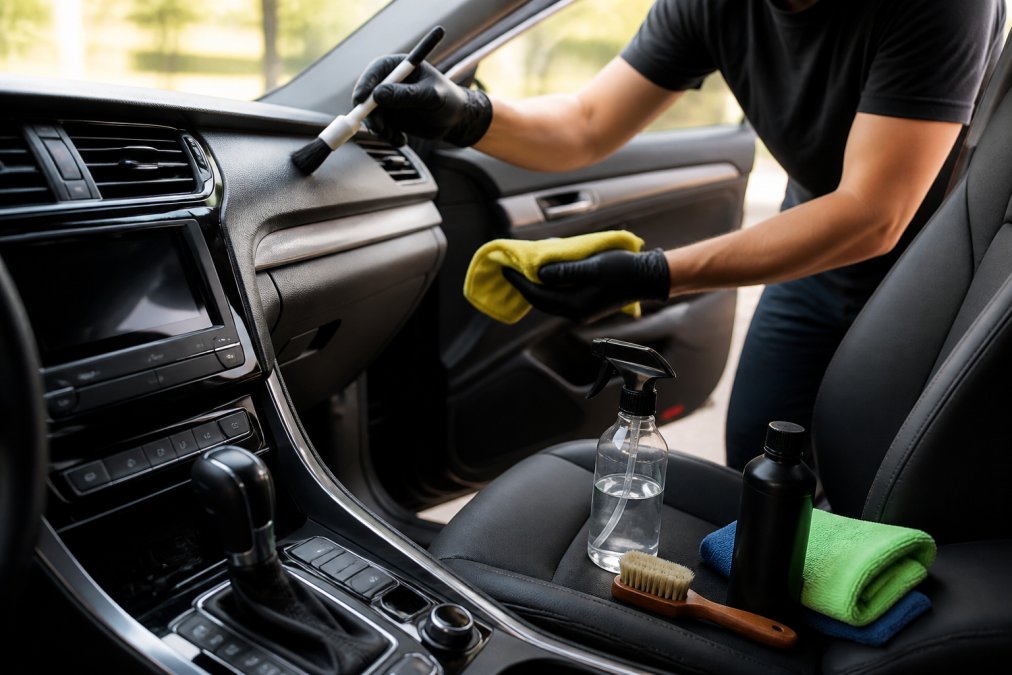
- Remove mats and loose items, then vacuum the whole cabin
- Use cleaning putty and a crevice tool on vents and seat rails
- Agitate surfaces with a detailing brush, matching bristles to material
- Wipe with a damp microfiber towel, then dry with a separate one
- Apply interior protectant with an applicator pad for a non-greasy finish
- Scrub and extract carpets last, then let everything dry fully
Car Interior Cleaning Tips for New Drivers
Car interior cleaning tips for new drivers should be simple enough to repeat monthly. The biggest mistake is over-wetting surfaces, which pushes dirt deeper into fabric and can damage electronics.
- Keep two towel colors: one for cleaner, one for drying
- Never spray cleaner directly onto screens or buttons
- Test any new product on a hidden area first
- Clean little and often rather than deep cleaning once a year
Tool Storage, Eco-Friendly Options, and Troubleshooting Common Failures
Most interior cleaning guides stop at the purchase. What separates a kit that lasts three years from one that lasts three months is how you store, clean, and troubleshoot the tools themselves, a topic almost no ranking guide covers in depth.
Storage and organization that protects your investment
Bristles are the most fragile part of any detailing brush, and the fastest way to ruin them is to store brushes head-down in a loose bin. A simple divided bin or hanging rack keeps bristles straight and lets them dry fully between uses.
A practical storage setup for a full interior kit:
- Divided bin or tool roll for brushes, sorted by firmness so you never grab a stiff brush for a soft surface by mistake
- Mesh bag for microfiber towels, kept separate from brushes so lint does not transfer
- Sealed container for cleaning putty, which dries out and loses tack when exposed to air
- Upright slot for spray bottles so triggers do not leak into the bin
- Dedicated shelf or hook for the vacuum hose and attachments, coiled loosely to avoid kinks
Eco-friendly and non-toxic tool alternatives
The sustainable option is usually also the cheaper option over a year of use:
- Refillable spray bottles paired with concentrated, pH-balanced cleaners you dilute yourself, less plastic, less shipping weight, lower cost per job
- Washable microfiber instead of disposable wipes, a quality 300-400 GSM towel survives dozens of wash cycles if you avoid fabric softener and hot dryers
- Reusable wash mitts and applicator pads that can be rinsed and air-dried rather than thrown away
- Biodegradable or natural-bristle brushes (such as boar hair) for leather and delicate trim, which break down more cleanly at end of life than some synthetic alternatives
- Concentrated interior protectants in refillable bottles, applied with a reusable foam or microfiber applicator
Troubleshooting common tool failures
When a tool underperforms, the cause is usually mechanical, not chemical. Work through this table before replacing anything:
| Problem | Likely Cause | Fix |
|---|---|---|
| Streaky finish on glass or trim | Dirty, low-GSM, or fabric-softener-damaged towel | Switch to a fresh lint-free 300-400 GSM towel; wash without softener |
| Brush scratches trim | Bristles too stiff for the surface | Use soft synthetic or boar hair on plastics, screens, and leather |
| Vacuum loses suction | Clogged filter, full canister, or blocked attachment | Empty canister, rinse or replace filter, clear the crevice tool with a wire or compressed air |
| Putty stops grabbing | Saturated with dirt and lint | Knead once or twice, then replace with fresh putty |
| Spray bottle trigger leaks or sticks | Cleaner residue dried in the nozzle | Soak the trigger head in warm water, then flush with clean water |
| Bristles bend or splay | Stored head-down or dried under weight | Store bristles up or hanging; reshape while damp |
| Microfiber towels smell musty | Stored damp or washed in a sealed load | Wash separately, dry fully before storing, keep in a breathable mesh bag |
Maintaining the tools themselves
A short maintenance routine keeps the whole kit working:
- After every job: rinse brushes under warm water, comb bristles straight, and air-dry head-up.
- Weekly: wash microfiber towels in a dedicated load with a small amount of detergent, no fabric softener, no dryer sheets.
- Monthly: inspect vacuum filters and attachments, clear clogs, and check spray triggers for residue.
- Seasonally: replace cleaning putty, discard towels that have gone stiff or lost pile, and re-check that no bristles have splayed.
Conclusion
Keeping an interior spotless is a habit, not a one-off job, and the right tools make that habit easy to sustain. Munk'Goods offers a curated selection of high-quality car accessories and lifestyle items, including interior organizers and detailing essentials, so you can upgrade your cabin without digging through a cluttered catalog. Explore the collection, find the tools that fit your vehicle, and enjoy a cleaner, better-looking interior every day.
Frequently Asked Questions
What tools do professional detailers use for car interiors?
Professional detailers rely on a small core kit: a wet-dry vacuum with a crevice tool, soft detailing brushes (synthetic and boar hair), pH-balanced cleaners, microfiber towels with different GSM ratings, and a cleaning putty for vents. They also use applicator pads for leather conditioning and interior protectants with UV blockers. The key is matching each tool to the surface, so you avoid scratches on screens and damage to upholstery.
What are the essential car interior cleaning supplies for beginners?
Start with a microfiber towel set, a pH-balanced all-purpose cleaner, a soft detailing brush, a crevice tool or vacuum attachment, and a small spray bottle. Add a cleaning putty for vents and an interior protectant for UV protection. These essentials cover most surfaces without overwhelming you. You can expand into extraction tools and detailing kits once you are comfortable with the basics.
Are steam cleaners worth it for car interior detailing?
Steam cleaners work well for deep cleaning fabric seats, carpets, and stubborn stains because they use heat instead of harsh chemicals. They are worth it if you deal with spills, pet messes, or frequent deep cleaning. For routine maintenance, a wet-dry vacuum and microfiber towels handle most jobs. Steam adds cost and requires care around leather and electronics, so weigh that against how often you need extraction-level cleaning.
How often should you deep clean your car interior?
A deep clean every three to four months keeps upholstery, carpets, and vents in good shape for most drivers. Weekly spot cleaning with microfiber towels and a pH-balanced cleaner handles daily dust and crumbs. If you commute daily, have pets, or drive with kids, aim for a deep clean every two months. Regular cleaning prevents stains from setting and keeps interior protectants working longer.