
Table of Contents
- Assess Your Vehicle's Exterior Paint and Design
- Understand Color Psychology and Cabin Atmosphere
- Choose Between Neutral vs. Bold Color Palettes
- Best Car Interior Colors for Resale Value
- Car Interior Color Maintenance Tips and Materials
- Visualizing and Testing Your Color Scheme
- Customizing Upholstery and Trim for Long-Term Durability
- Frequently Asked Questions
Last Updated: September 21, 2026
Assess Your Vehicle's Exterior Paint and Design
Your car's exterior color sets the tone for everything inside. When selecting car interior color schemes, assess what's already on the outside, a sleek silver sedan calls for different interior vibes than a deep red SUV.
Study your vehicle's design language. Some cars lean minimalist and clean; others embrace bold, dramatic lines. Your interior should echo these themes, not fight them.
Consider trim materials: matte finishes pair differently than glossy ones, chrome accents work with cooler tones, and warm wood-grain trim suggests earthy interiors. The goal is cohesion, your cabin should feel like one intentional design.
Light reflection affects interior color perception. A white exterior bounces intense sunlight into the cabin, making light cream upholstery feel washed out, while dark exteriors reduce glare and make the same upholstery appear rich.
Understand Color Psychology and Cabin Atmosphere
Colors shape how you feel behind the wheel. A car interior color scheme influences your mood, stress levels, and driving experience daily.
Neutral tones like gray, beige, and black create calm, focused environments that reduce visual noise and help you concentrate on the road, ideal for daily commuters and professionals.
Warm tones, browns, tans, creams, evoke comfort and luxury, making smaller cabins feel cozier. Leather in these shades adds a premium feel that appeals to families.
Cool tones like blue and silver suggest sophistication and modernity, appealing to tech-forward drivers seeking a modern cabin feel.
Red and orange interiors are rare because they stimulate and fatigue over hours of driving. Reserve bold colors for small accents: seat stitching, trim, or floor mats.
Calming interiors help buyers envision ownership; jarring colors create hesitation and hurt resale value.
Choose Between Neutral vs. Bold Color Palettes
This decision splits into two camps: play it safe or make a statement. The right choice depends heavily on your climate.
Neutral palettes dominate for solid reasons: they're timeless, appeal to future buyers, hide dirt and stains, remain relevant across decades, and pair with any accent color.
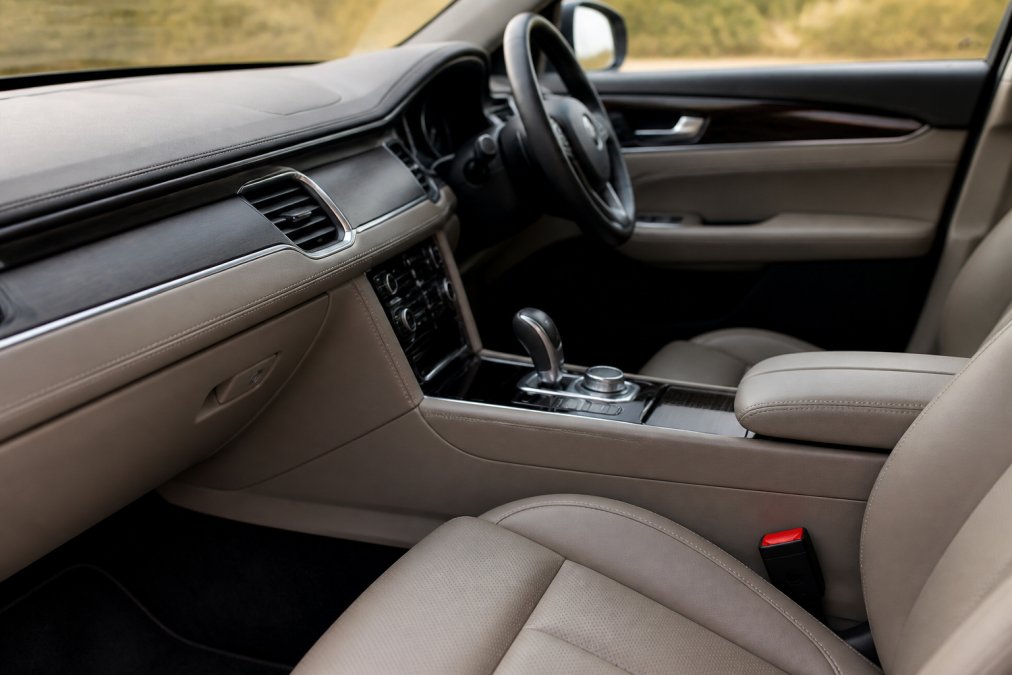
Bold palettes make your car unmistakably yours with contrasting seat colors and custom upholstery. The downside: they age faster, appeal to fewer buyers, and require more maintenance as stains show clearly on light upholstery or fade visibly on dark colors.
The middle ground works best: start with a neutral base and add boldness through accents like colored stitching, custom floor mats, or trim wraps. This personalizes without sacrificing resale appeal.
Climate-Specific Color Selection: The Overlooked Factor
Hot, sunny climates (Arizona, Southern California, Texas, Middle East): Light interiors are essential. Dark colors absorb solar radiation, raising cabin temperatures 10-15°F higher than light interiors. Beige, cream, light gray, and white reflect heat and keep cabins 20-30°F cooler, extending material lifespan and reducing air conditioning strain. Trade-off: light colors show dust and stains more readily. Choose light-colored fabric with Scotchgard treatment or budget for frequent cleaning.
Cold, moderate climates (Northern US, Canada, Northern Europe): Dark interiors absorb limited solar heat, warming cabins faster on cold mornings and hiding winter grime. They feel luxurious during long, dark winters. Downside: they require UV protection because winter sun reflects off snow. Leather conditioning and UV-blocking window treatments are essential.
Humid, tropical climates (Florida, Southeast US, Southeast Asia): Moisture resistance trumps color choice. Choose materials with antimicrobial properties; light colors help you spot mold early. Leather or synthetic materials resist moisture better than fabric. Ensure good ventilation and use a cabin air filter with activated charcoal.
Variable seasonal climates (Northeast, Midwest, Mountain regions): Medium tones, charcoal gray, taupe, warm gray, balance summer heat absorption with winter warmth. Avoid pure white and pure black. UV-protective treatments are critical due to altitude and seasonal angle changes.
Neutral palettes offer timeless appeal, hide dirt, appeal to more buyers, and work with any accent. Bold palettes provide unique personality and visual interest but age faster, limit future buyers, and show stains or fading more readily.
Best Car Interior Colors for Resale Value
Future-proofing your interior protects your investment's resale value.
Black and gray interiors hold value best. They're professional, versatile, and appeal to the broadest buyer base. Gray feels modern without being trendy.
Car Accessories for MINI Cooper R50 R53 →
Beige and tan rank second, suggesting luxury and comfort. Trade-off: they show dirt faster, requiring vigilant maintenance.
White and cream interiors appeal to minimalist buyers and work well in luxury brands but can feel cheap in economy vehicles. They require vigilant cleaning.
Brown interiors have faded from popularity, hurting resale value unless your vehicle is a high-end luxury model.
Avoid red, orange, or purple interiors if resale matters, they limit your buyer pool dramatically.
Two-tone interiors can work if colors are complementary, not competing. Clashing combinations feel dated quickly.
The best car interior color schemes for resale combine a neutral base with quality materials. Leather beats fabric for value retention; stitching details and trim quality matter more than color boldness.
Car Interior Color Maintenance Tips and Materials
Color and material choice are inseparable and determine how your interior ages. Understanding why colors fade helps you predict long-term durability.
How UV Exposure Degrades Interior Colors Over Time
Ultraviolet radiation is the primary enemy of car interior colors. UV rays penetrate window glass and break down chemical bonds in dyes and pigments through photodegradation, an irreversible process.
Dark colors fade differently than light colors. Black leather develops a grayish patina; beige and cream develop yellow or brown undertones. Red and orange accents fade fastest, losing 30-50% saturation within 3-5 years in high-UV climates.
Gray and charcoal interiors show UV damage least visibly, making them among the most durable interior colors for long-term appearance.
Material-Specific Durability and Color Interaction
Leather requires conditioning every 3-6 months and UV protection products to prevent cracking and fading. High-quality treated leather lasts 10-15 years; untreated leather degrades within 5-7 years.
Strategic Material Selection for Your Climate and Driving Habits
Daily commuters in sunny areas should choose light-colored leather or fabric with Scotchgard treatment and apply UV-blocking window tint to reduce cabin temperature and UV penetration by 50-70%.
Predicting Long-Term Color Durability
Black interiors fade to gray-black within 5-7 years in high-sun climates. Gray interiors fade minimally; charcoal gray is most durable. Beige/cream develop yellow or tan undertones within 5-8 years. White remains bright but shows stains and requires monthly cleaning. Bold accent colors lose 30-50% saturation within 3-5 years in high-UV climates; reserve for replaceable elements.
Visualizing and Testing Your Color Scheme
Real-world testing prevents expensive color scheme mistakes.
Collect reference images of interiors you love, studying them in different lighting conditions. Build a mood board of your ideal aesthetic.
Customizing Upholstery and Trim for Long-Term Durability
Material choice determines longevity.
Premium leather lasts 10-15 years with proper care and develops character over time. Budget accordingly based on your preference for patina or pristine condition.
Frequently Asked Questions
What are the best color combinations for car interior?
Neutral tones like black, gray, and beige paired with tan or cream accents create timeless, versatile color schemes. Monochromatic palettes (varying shades of the same hue) work well for a cohesive cabin atmosphere. For contrast, pair dark dashboard trim with lighter seat upholstery, or vice versa. Two-tone combinations, such as black leather seats with tan trim, add visual interest while maintaining practicality. Avoid overly saturated colors that fade quickly under UV exposure. Test combinations in different lighting conditions before committing to ensure they match your vehicle's exterior and personal aesthetic appeal.
How do I match my car interior color with the exterior paint?
Start by identifying your vehicle's exterior color temperature (warm or cool). Warm exterior colors like silver or champagne pair well with tan, cream, or light gray interiors. Cool-toned exteriors like black or dark blue suit charcoal, navy, or black cabin interiors. Consider your vehicle's overall design language, luxury vehicles typically use darker, more sophisticated palettes, while compact cars often feature lighter, brighter schemes. View fabric and leather samples in natural daylight alongside your car's exterior. Avoid extreme contrasts unless you want a bold statement; subtle coordination between exterior and interior creates a more polished, intentional appearance and better resale value.
Does car interior color affect resale value?
Yes, significantly. Neutral interior colors like black, gray, and beige appeal to the broadest buyer pool and command higher resale prices. Dark interiors hide scuffs and stains better, reducing visible wear. Light interiors show dirt more easily, potentially lowering perceived condition. Bold or highly personalized color schemes limit buyer appeal and can reduce resale value by 5-15%. Leather upholstery in neutral tones typically outperforms fabric in the used market. UV-faded or stained interiors, regardless of original color, damage resale potential. Maintaining your chosen color through regular cleaning and UV protection helps preserve both aesthetic appeal and market value over time.
What's the best way to change car interior color without replacing upholstery?
Use seat covers in your desired color and material to instantly refresh your cabin atmosphere without permanent changes. Leather-look seat covers protect original upholstery while adding luxury feel and color coordination. Customize dashboard trim with adhesive wraps in complementary shades, or replace removable trim pieces with aftermarket options. Add color through steering wheel covers, floor mats, and door panel accents. Install custom seat covers like those available from Munk'Goods (starting at $46.76 for vehicle-specific designs) to achieve a cohesive look. This approach allows you to test color combinations before committing, maintain stain resistance, and easily revert if you change your preferences, ideal for renters or those uncertain about permanent customization.