
Table of Contents
- Why Quality Home Decor Changes How a Room Feels
- Your Home Decor Buying Checklist: What to Inspect Before You Pay
- How to Spot Quality Craftsmanship in Decor and Furniture
- The Best Materials for Home Decor by Room and Use
- Quality Home Decor on a Budget: Where to Spend and Where to Save
- Durability, Maintenance, and What to Expect Over Time
- Frequently Asked Questions
Last Updated: October 7, 2026
Why Quality Home Decor Changes How a Room Feels
Walk into two rooms with identical furniture layouts and you will feel the difference instantly. One feels calm and finished. The other feels off, even if you cannot say why.
Quality home decor is the combination of materials, construction, and finish that determines how a piece looks, wears, and ages in your space. It is not the same as price. A well-made ceramic vase can cost less than a poorly built lamp, and it will still outlast it.

Here is the part most guides get wrong: they tell you to "buy quality" without defining it. We will show you what quality actually looks like up close, in your hands, before you pay.
Your Home Decor Buying Checklist: What to Inspect Before You Pay
Most buying guides tell you to check for quality but never explain what quality looks like on a specific material. This checklist closes that gap. It walks through the exact inspection points for wood, upholstery, finishes, seams, hardware, and joinery so you can judge a piece in under two minutes, whether you are in a store or reading an online listing.
Start with the three questions that matter most: what is it made of, how is it joined, and how will it age? Answer those before you look at the price tag.
Wood and Wood-Based Materials
- Solid wood: Look for continuous grain that wraps around edges and appears on the underside. End grain should be visible at joints. If the top is solid but the sides are veneer, that is normal, but the seller should say so.
- Veneer: Good veneer is thick enough to sand lightly and is applied over a stable substrate like plywood or MDF. Run your fingernail along an edge. If the veneer lifts or chips easily, it is too thin.
- Particleboard and MDF: These are not automatically bad, but they fail when they get wet or bear heavy load. Check that edges are sealed and that screws bite into something solid, not just the board.
- Joinery: Dovetail and mortise-and-tenon joints are strong and traditional. Dowels and pocket screws are common in mid-range furniture and can last if reinforced. Staples and glue alone are a warning sign on anything structural.
Upholstery and Textiles
- Fabric content: Natural fibers like wool, linen, and cotton breathe and age well. Synthetic blends can be durable but may pill or shine over time. Ask for the rub count if you are buying a sofa or chair.
- Seams and pattern matching: Seams should be straight and tight. Patterns should line up across cushions, arms, and back panels. Misaligned patterns are a sign of rushed production.
- Cushion construction: High-resilience foam wrapped in batting holds its shape longer than cheap foam. Sit on it, then stand up. If it stays compressed, it will not last.
- Frame under the fabric: Press on the arms and back. You should feel a solid frame, not flex or creaking.
Finishes, Hardware, and Bases
- Finish: Run your hand across the surface. It should be smooth and even, with no drips, bubbles, or thin patches where color fades. On painted pieces, check edges and corners for coverage.
- Hardware: Hinges, handles, and drawer glides should feel solid. Open and close drawers and doors several times. They should move smoothly without wobble or grinding.
- Base and underside: Flip the piece over. A finished, felted, or stamped base shows the maker cared about the whole piece. Rough, unfinished undersides are a sign of cost-cutting.
- Weight: Pick it up. Heavier pieces usually mean denser material and better build. If it feels surprisingly light for its size, inspect the construction closely.
Online Listings: How to Read Photos and Seller Claims
Online shopping hides flaws, so you have to read between the lines. Zoom into every photo and look for the details sellers rarely photograph: the base, the back, the joints, and the edges.
Watch for these signals:
- One photo only: A single styled shot usually means the seller is hiding something.
- Heavy filters: Warm, hazy edits can mask scratches, dents, or uneven color.
- Vague materials: "Premium material" tells you nothing. Look for named materials.
- No dimensions: Always check size before you buy. Scale is the most common online regret.
Also read the return policy before checkout. A clear, fair returns process is one of the strongest signs a seller stands behind their goods.
In-Store and Secondhand Finds: What to Check in Person
Buying in person is your advantage, so use it. Pick the piece up, turn it over, and inspect it from every angle. Natural light reveals flaws that store lighting hides.
For secondhand and thrifted finds, focus on structure over surface:
- Ignore small cosmetic wear. A scratch is easy to live with; a wobbly leg is not.
- Test stability. Press down on corners and listen for creaks.
- Check for repairs. Old glue, mismatched screws, or uneven paint suggest past damage.
- Smell it. Musty odors can mean damp storage or hidden mold.
Secondhand pieces often use denser, older materials than new mass-market items. That is why thrifting can beat buying new, if you know what to look for.
How to Spot Quality Craftsmanship in Decor and Furniture
Learning how to spot quality craftsmanship comes down to one habit: look where the maker did not expect you to look. Flip the piece over. Check the underside, the back panel, and the inside of drawers.
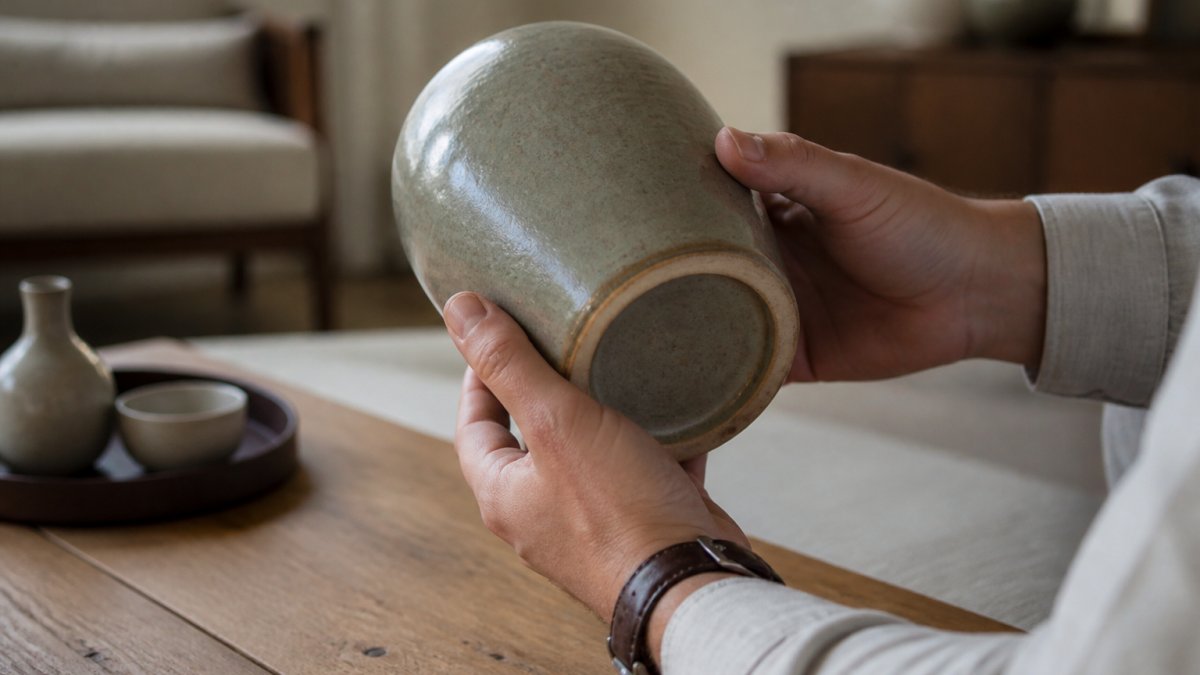
A maker who finishes the hidden parts is a maker who cares about the visible ones.
Joints, Seams, and Finishes That Hold Up
Joints are where furniture fails first. Here is what to look for:
- Dovetail and mortise-and-tenon joints: Strong, traditional, built to last.
- Screws and metal brackets: Fine for flat-pack, weaker under daily stress.
- Staples and glue only: A warning sign on anything that bears weight.
- Even seams on upholstery: Pattern should line up across cushions and arms.
If the joints are tight and the finish is even, the piece will hold up. If they are loose or rushed, it will not, no matter how good it looks on day one.
The Best Materials for Home Decor by Room and Use
The best materials for home decor depend on where the piece lives and how much wear it takes.
Handmade Ceramic Vase, Vintag / →
| Room | Best Materials | Avoid | Why It Matters |
|---|---|---|---|
| Living room | Solid wood, wool, stoneware | Thin veneer, hollow plastic | High traffic and daily use |
| Bedroom | Linen, porcelain, soft wood | Heavy finishes, sharp edges | Calm, low-wear space |
| Kitchen | Stoneware, glass, metal | Porous untreated wood | Moisture and heat exposure |
| Bathroom | Ceramic, glass, sealed stone | Raw wood, unsealed metal | Humidity and splashes |
| Entryway | Metal, dense wood, stone | Light fabrics, paper | Constant coming and going |
A simple rule: match the material to the abuse. The harder a space works, the tougher the material should be.
For decorative pieces, material matters less for durability and more for feel.
Small sculptural pieces do a lot with very little space. And for bare walls, a 3-piece wood wall decor set adds warmth and a focal point above a sofa or bed.

Quality Home Decor on a Budget: Where to Spend and Where to Save
Quality home decor on a budget is about priorities, not deprivation. Spend on the pieces you touch and use daily. Save on the pieces you look at.
Spend more on:
- Sofas and seating, where comfort and structure matter most
- Dining tables and beds, the hardest-working pieces in the home
- Lighting, which sets the mood of every room
- Anything you will keep for a decade or more
Save on:
- Trend-driven accents you may swap in a year
- Small decorative objects you can refresh often
- Seasonal items and quick room refreshes
- Secondhand finds in good structural condition
The math is simple. One well-built sofa outlasts three cheap ones and costs less over time. That is the total cost of ownership argument, and it applies to almost everything in your home.
Durability, Maintenance, and What to Expect Over Time
Durability is not just about how a piece is built. It is about how you care for it, how repairable it is, and whether it can survive the daily realities of your home. A well-made item treated badly will wear out faster than a modest one treated well. This section gives you realistic expectations by material, plus the maintenance habits that actually extend lifespan.
What to Expect by Material
- Solid wood: Decades, with occasional oiling or waxing. Scratches can be sanded out. Dents can sometimes be steamed out. Repairability is high.
- Stoneware and porcelain: Many years, if you avoid hard knocks. Chips and cracks are usually permanent, but the material itself does not degrade.
- Natural fabrics: Years of use, with regular cleaning and rotation. Wool and linen can be reupholstered or repaired. Synthetics may pill or shine but are often more stain-resistant.
- Metal: Long life, but watch for rust in damp rooms. Powder-coated finishes resist chipping better than paint.
Maintenance That Actually Extends Lifespan
- Dust regularly with a soft cloth. Abrasive cleaners scratch finishes.
- Keep pieces out of direct sun to prevent fading. Rotate rugs and cushions to even out wear.
- Fix small issues early. A loose screw tightened today prevents a wobbly joint tomorrow.
- Use felt pads under heavy items. They prevent scratches and make rearranging easier.
Repairability and Total Cost of Ownership
A piece that can be repaired is worth more than one that cannot. Before you buy, ask: can this be reupholstered, refinished, or re-glued? Are replacement parts available?
That is the total cost of ownership argument. One well-built sofa outlasts three cheap ones and costs less over time. The same math applies to dining tables, beds, and lighting. When you compare upfront price, factor in expected lifespan, repairability, and replacement cost.
Real-World Wear: Pets, Children, and Cleaning
High-use homes need tougher materials. For pets, tightly woven fabrics and leather resist claws better than loose weaves. For children, rounded edges, washable covers, and non-toxic finishes matter.
A common pattern is to spend more on the pieces that take the most abuse and save on decorative accents that rarely get touched. That is how you get a home that looks good and holds up.
Frequently Asked Questions
What should I look for when buying quality home decor?
Check three things before you pay: material, construction, and weight. Solid wood, stoneware, and natural fabrics outlast particleboard and thin plastics. Look at joints, seams, and glazes for even finishing. A piece that feels heavier than expected usually uses denser material. Also ask how to clean it, since decor you cannot maintain will not stay looking good.
How can you tell if home decor is well made?
Turn the item over. Well-made decor has smooth, sealed undersides, consistent color, and no wobble when set on a flat surface. On furniture, check that joints are tight and screws are not stripped. On ceramics, look for an even glaze with no bubbles or cracks. On textiles, check that patterns align at the seams and edges are finished, not raw.
Which materials are best for durable home decor?
Solid wood, stoneware and porcelain, stone, and natural fibers like wool and linen hold up best. Porcelain vases and ceramic figurines resist chipping better than thin glass when handled carefully. For furniture, solid wood frames outlast particleboard. For soft goods, tight weaves and reinforced seams matter more than the fiber name on the label.
How can I choose decor that looks high-end without overspending?
Spend on pieces you touch and see daily: a sofa, a lamp, a coffee table. Save on decorative accessories you rotate often. Secondhand and thrifted finds often beat new budget items on material quality. A handmade ceramic vase or a set of wood wall art can anchor a room for under thirty dollars, so budget decor can still read as considered rather than cheap.