
Table of Contents
- What Makes Modern Aesthetic Home Decor Work in 2026
- Minimalist Home Decor Ideas That Actually Feel Warm
- How to Style a Modern Living Room Step by Step
- Best Modern Home Decor Accessories for Small Spaces
- Sustainable and Budget-Friendly Modern Decor
- Smart Home Integration Without Breaking the Aesthetic
- Modern Aesthetic Mistakes to Avoid
- Conclusion
- Frequently Asked Questions
Last Updated: September 27, 2026
What Makes Modern Aesthetic Home Decor Work in 2026
Modern aesthetic home decor works when it prioritizes function, clean lines, and a calm, clutter-free atmosphere over ornamentation. At Munk'Goods, we offer versatile pieces that earn their space. The style rewards restraint, but it fails when people confuse "minimal" with "empty."

The core principle is form and function working together. A low-profile sofa should be comfortable. A floating shelf should hold what you actually use. When a piece looks sleek but serves no purpose, it reads as staged rather than lived-in.
That distinction matters more than any single trend. Get it right and a small apartment can feel refined. Get it wrong and even a large room feels cold.
Minimalist Home Decor Ideas That Actually Feel Warm
Minimalist home decor ideas succeed when texture and natural materials do the emotional work that color usually handles. A neutral room isn't cold because it lacks color; it's cold because it lacks contrast and touch. Add both and the space warms up fast.
Start with organic materials: wood, stone, linen, wool, and ceramic. These bring subtle variation that flat finishes can't. A wooden coffee table beside a boucle chair creates the textural contrast that keeps a monochromatic room from feeling sterile.
The 3-5-7 Rule for Balanced Shelves and Consoles
The 3-5-7 rule is a simple styling framework: group objects in odd numbers (three, five, or seven) and vary their heights so the eye moves naturally across the display. Odd groupings feel less static than even ones, and the variation prevents the "row of identical vases" problem.
Apply it like this:
- Three items: one tall, one medium, one small object
- Five items: add a horizontal element like a stack of books or a tray
- Seven items: layer in a trailing plant or a leaning frame for depth
Neutral Color Palettes Without the Sterile Look
A neutral palette stays warm when you work in tonal layers rather than one flat shade. Combine warm whites, oatmeal, soft greys, and muted earth tones across different surfaces. The variation reads as intentional, not unfinished.
How to Style a Modern Living Room Step by Step
To style a modern living room, anchor the layout first, then layer lighting, then add texture. The order matters because each layer constrains the next: a rug decides where seating can float, lighting decides which walls read as focal points, and texture decides whether the neutral palette feels warm or clinical.
Step 1: Define the layout with a rug as the anchor. Pull furniture slightly away from walls and create a clear walking path of at least 30 inches between seating and traffic zones. An open floor plan benefits from a rug that visually groups the seating area, a common pattern is to size the rug so the front legs of every seat sit on it, which prevents the "postage stamp" look that makes a large sofa feel unmoored. In a typical 12x14 foot living room, an 8x10 rug handles this; in a smaller 10x12 room, a 5x8 forces you to choose between floating the sofa or skipping the rug entirely.

Step 2: Set the lighting in layers. Combine ambient lighting from a ceiling fixture with task lighting from a floor or table lamp, and aim for three distinct light sources at different heights.
Step 3: Add textural contrast. Introduce soft furnishings: a wool throw, linen cushions, a jute rug. These soften the hard edges of sleek furniture. The mechanism is simple, modern furniture leans on smooth, reflective surfaces (lacquered wood, metal, glass), and texture is what absorbs light and breaks up the reflections. A room with five smooth surfaces and zero textured ones will feel like a showroom no matter how good the individual pieces are.
Layout, Lighting, and Textural Contrast
These three elements decide whether a room feels curated or chaotic. Layout controls flow, lighting controls mood, and texture controls warmth. When all three align, the space feels finished even before you hang a single piece of art.
3PCS Modern Wood Art Wall Decor →
Best Modern Home Decor Accessories for Small Spaces
The best modern home decor accessories for small spaces are vertical and multi-purpose, but the reason they work is psychological, not just spatial. Small rooms feel cramped when the eye has nowhere to travel, and they feel calm when visual weight is distributed across the walls instead of piled on the floor. Understanding that mechanism changes which accessories are actually worth buying.
| Small-Space Accessory | Where to Place It | Why It Works |
|---|---|---|
| Wood wall art set | Above sofa or bed, centered at eye level | Uses vertical space, adds warmth, gives the eye a destination |
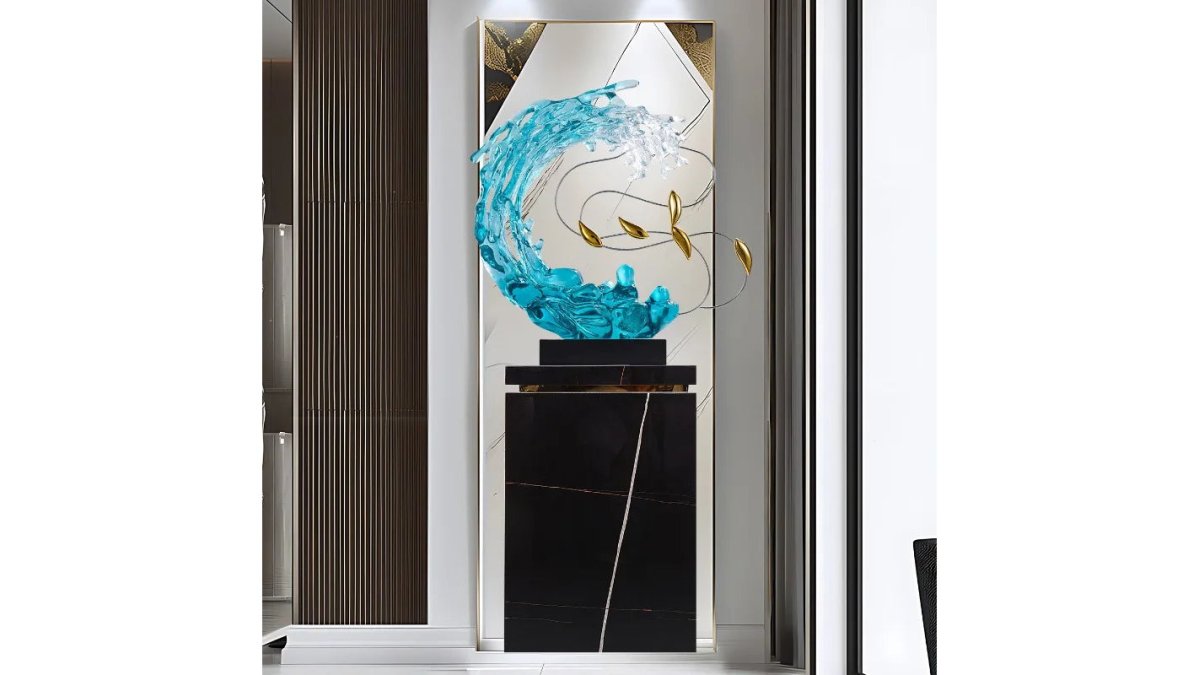
| Abstract sculpture | Console or shelf, alone | Creates a focal point without competing for attention |
| Nordic decor accent | Sideboard or desk, offset from center | Adds character without bulk; asymmetry reads as intentional |
| Floating shelves | Any bare wall, staggered heights | Storage plus display; staggering prevents a "ladder" look |
| Slim leaning mirror | Opposite the main window | Doubles perceived light and depth without floor footprint |
The Psychology of Vertical Styling in Small Rooms
Vertical styling works because human vision reads a room top-to-bottom before it reads it side-to-side. When the upper third of a wall is empty, the eye drops to the floor and the room feels shorter than it is. When art, shelves, or a tall plant occupy that upper zone, the eye travels upward and the ceiling feels higher.
Sustainable and Budget-Friendly Modern Decor
Sustainable modern decor starts with buying less and choosing better. The most eco-friendly piece is the one you already own and restyle. Before buying anything new, rearrange what you have: rotate art, move a lamp, regroup shelf objects.
Smart Home Integration Without Breaking the Aesthetic
Smart home devices can disappear into a modern interior when you choose them for form as well as function. The goal is technology that supports the aesthetic rather than interrupting it. Visible cables and clunky hubs are the fastest way to ruin a clean room.
Practical approaches that keep the look intact:
- Mount a smart display flush to the wall or set it on a console like a framed photo
- Choose matte finishes over glossy plastic where devices are visible
- Group controls into one hub instead of scattering separate units
- Hide charging cables in a lidded box or cable tray
Modern Aesthetic Mistakes to Avoid
The most common modern aesthetic mistakes come from overcorrecting toward minimalism. A room stripped of texture, warmth, and personal objects reads as a showroom, not a home. Modern design is about editing, not erasing.
Watch for these pitfalls:
- All-white everything. Without tonal variation, the space feels clinical.
- Too many matching pieces. Identical furniture sets look like a catalog page.
- Ignoring scale. A tiny rug under a large sofa throws off visual balance.
- Skipping lighting layers. One overhead light flattens the whole room.
- Clutter disguised as decor. More objects don't equal more style.
Conclusion
Getting the modern aesthetic right comes down to balance: clean lines with warmth, restraint with personality, and function with form. It's a discipline, not a shopping spree.
Frequently Asked Questions
What are the essential elements of modern aesthetic home decor?
Modern aesthetic home decor rests on a few repeatable elements: clean lines, a neutral color palette, functional furniture, and one or two statement pieces that carry the room. Textural contrast matters as much as color, so mix wood, ceramic, linen, and metal rather than relying on one finish. Ambient lighting from floor lamps or wall sconces softens the look, and keeping surfaces clutter-free lets each accent piece read clearly. Start with the layout, then layer decorative accents on top.
How do you achieve a modern aesthetic in a small apartment?
Small apartments benefit most from vertical storage and floating shelves, which free up floor space while giving you display room. Choose multi-purpose furniture, keep the color palette monochromatic or neutral, and use mirrors to bounce light around the room. Scale matters: a large statement piece in a small room looks intentional, while several small items look cluttered. Curated wall decor, like a coordinated 3-piece set, adds visual balance without eating into your floor plan.
How can I mix textures in modern home decor?
Pick three textures per room and repeat them at different scales. A common combination is smooth ceramic, natural wood, and soft textiles like linen or wool. Textural contrast keeps a neutral palette from feeling flat, which is the most common complaint about minimalist interiors. Add one reflective surface, such as a chrome fixture or a mirror, to catch light. If a room feels cold, swap a hard accent for an organic material like a woven basket or a wooden decorative piece.
What are the 2026 home decor trends for modern interiors?
Modern interiors in 2026 lean toward warmer minimalism: neutral palettes with organic materials, sculptural decorative accents, and fewer but better-chosen pieces. Open floor plans continue to drive layout decisions, and ambient lighting keeps replacing single overhead fixtures. Sustainable and upcycled decor is moving from niche to mainstream, and smart home devices are increasingly chosen for how they look as much as what they do. The overall direction is refined, clutter-free, and functional.