
Table of Contents
- What Shoppers Actually Want From CarID Alternatives
- What Separates the Best Online Auto Parts Stores
- How to Verify Auto Parts Quality Before You Order
- Signs of Reliable Car Accessory Websites
- Aftermarket vs. OEM Vehicle Accessories: Which Fits Your Build
- Interior Accessories Worth Buying in 2026
- Frequently Asked Questions
Last Updated: September 30, 2026
What Shoppers Actually Want From CarID Alternatives
Shoppers searching for CarID alternatives for vehicle accessories are usually chasing one thing: confidence that a part will actually fit. This guide from Munk'Goods covers what separates a trustworthy retailer from a frustrating one, so you can order vehicle accessories once and get them right the first time.
The frustration is real. A common complaint among online auto parts buyers is ordering a part that looks correct in the photo, only to find it doesn't match the vehicle's model year or trim. That single problem drives most of the search for better options.
Below, we break down the criteria that matter most: fitment accuracy, return logistics, warranty coverage, and technical support. The retailers that get these right earn repeat business. The ones that don't, don't.
What Separates the Best Online Auto Parts Stores
The best online auto parts stores share three traits: accurate fitment data, transparent return policies, and responsive support. Everything else is secondary.
Most shoppers assume price is the deciding factor. In practice, it rarely is. A cheaper part that doesn't fit costs more in time, return shipping, and reordering than a slightly pricier part that works immediately.
Fitment Data and Vehicle Identification Number Lookup
Fitment is the single most important feature of any auto parts retailer. A vehicle identification number lookup tool lets you enter your VIN and see only parts confirmed to fit your exact vehicle.
Retailers with weak fitment data rely on vague categories like "fits most sedans." That language is a red flag. Reliable sites ask for your vehicle model year, make, model, and trim before showing results.
If a site offers no VIN lookup and no trim-level filtering, expect to do the compatibility research yourself.
Return Logistics, Restocking Fees, and Warranty Coverage
Return logistics are where budget retailers quietly cut corners. Restocking fees are common on special-order parts, and return shipping often falls on the buyer.
Before ordering, check three things:
- The return window length
- Whether restocking fees apply
- Who pays return shipping
Warranty coverage matters just as much. A part with a 12-month warranty tells you the retailer stands behind its product quality. A 30-day policy tells you something different.
How to Verify Auto Parts Quality Before You Order
Verifying auto parts quality comes down to three checks: cross-referencing part numbers, confirming manufacturer reputation, and reading reviews for fitment complaints specifically.
The most common mistake is trusting product photos alone. Photos get reused across listings, and a picture of a clean part says nothing about whether it will match your vehicle.
Start with the part number. Cross-reference it against the manufacturer's own catalog, not just the retailer's listing. If the numbers don't match, walk away.
Then read reviews, but read them differently than most shoppers do. Skip the five-star ratings and search for mentions of fitment, durability, and installation difficulty.
Counterfeit Part Mitigation and Technical Specifications
Counterfeit parts are a genuine risk in the online auto parts market, especially for high-demand components.
Technical specifications are your second line of defense. A legitimate listing includes material composition, dimensions, weight, and compatibility notes. Vague specs like "high-quality material" without detail signal a listing worth skipping.
Signs of Reliable Car Accessory Websites
Reliable car accessory websites show clear pricing, publish a real return policy, and offer multiple ways to reach support. These signals are easy to check in under five minutes.
Car Accessories for MINI Cooper R50 R53 →
Red flags include:
- No physical address or contact number
- Prices far below market average with no explanation
- Stock photos with no customer-submitted images
- No mention of warranty terms anywhere on the site
A retailer that hides its return policy or buries support contact information is telling you how it handles problems before you've even ordered.
Technical Support Availability and Mobile App vs. Desktop Experience
Technical support availability separates serious retailers from drop-shippers. Live chat, phone support, and email response times all matter when you're stuck mid-installation.
The mobile app versus desktop experience gap is real, too. Some retailers have excellent desktop catalogs and unusable mobile apps. If you shop primarily from your phone, test the mobile experience before committing to a large order.
A quick test: search for a specific part on your phone. If the filters don't work or the fitment tool is missing, that's your answer.
Aftermarket vs. OEM Vehicle Accessories: Which Fits Your Build
Aftermarket parts are made by third-party manufacturers; original equipment manufacturer parts are made by or for the vehicle's manufacturer. The right choice depends on your goal.
| Factor | Aftermarket | OEM |
|---|---|---|
| Price | Usually lower | Usually higher |
| Fitment | Varies by brand | Guaranteed for your model |
| Customization | Wide range of styles | Limited to factory options |
| Warranty | Brand-dependent | Manufacturer-backed |
| Best for | Upgrades, aesthetics, budget builds | Restorations, warranty-sensitive repairs |
For interior upgrades like seat covers or organizers, aftermarket options offer far more variety. For mechanical replacement parts under warranty, OEM is usually the safer call.
Interior Accessories Worth Buying in 2026
Interior upgrades deliver the most visible return for the least risk, since fitment issues are easier to spot and returns are simpler than with mechanical parts.
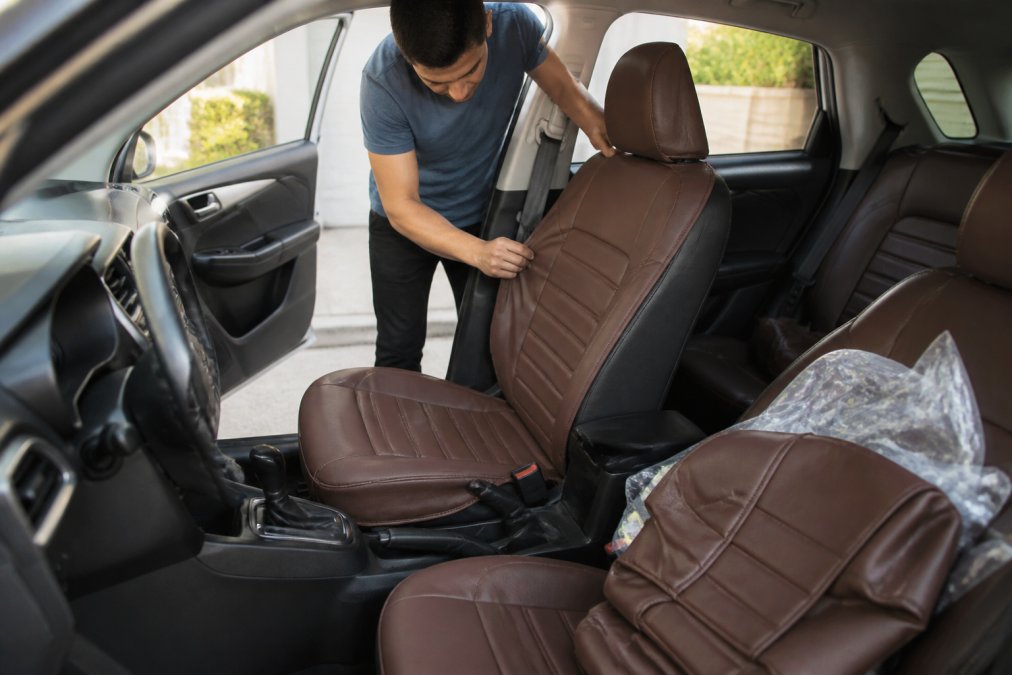
A few categories stand out this year:
- Seat covers: Custom-fit leather-look covers protect original upholstery and refresh worn interiors. Munk'Goods carries a custom leather seat cover set for MINI Cooper R-series models that covers both front and back seats, made from environmentally friendly leather.
- Seat belt covers: An adjustable shoulder strap cover made from nap cloth and leather adds comfort on long drives.
- Small organizers and decor: A cute bunny center console decoration adds personality without clutter, and a rhinestone bow sunglasses holder keeps glasses accessible on the visor.
For front-seat protection specifically, Munk'Goods also offers leather front seat cushion covers that guard against everyday dirt and wear.


Before ordering any seat cover, check compatibility carefully. Seat shapes, headrests, side airbags, and seat controls vary between models, so confirm the fitment details match your specific vehicle.
Frequently Asked Questions
Is CARiD legit for car parts, and what should I check before trusting any retailer?
Legitimacy comes down to verifiable details rather than brand recognition. Check whether the site publishes a real return policy with restocking fees stated up front, offers order tracking, and lists technical specifications for each part. Look for secure checkout and user reviews with photos. A retailer that hides its return terms or gives vague fitment data is a risk, no matter how well it ranks. Compare those basics across any vehicle accessories store before you commit.
How do I know a car accessory actually fits my specific vehicle model year?
Use the vehicle identification number or the exact model, year, and trim when searching. On Munk'Goods, for example, the MINI Cooper seat covers list fitment for R50, R53, R55, R56, R57, and R60 models from 2001 to 2016, and the listing asks buyers to send a photo and consult customer service first because it is a customized product. That photo step is the difference between a correct fit and a return.
What makes some car accessory websites more reliable than others?
Reliable car accessory websites share a few traits: clear compatibility information, a return policy you can read in full before ordering, responsive customer support, and product listings with real specifications rather than stock descriptions. Inventory depth matters too, since a store that carries related items can answer fitment questions faster.
Are aftermarket vehicle accessories as good as original equipment manufacturer parts?
Aftermarket parts often cost less and offer more customization, while original equipment manufacturer parts match factory specifications exactly. For interior upgrades like seat covers or console decorations, aftermarket options frequently outperform OEM on style and price. For performance parts and safety components, OEM or a proven aftermarket brand is safer. Decide based on whether the part affects safety or is purely cosmetic.
How can I avoid counterfeit parts when shopping online?
Buy from retailers that publish material details, country of origin, and high-concerned chemical status on the listing. Counterfeit mitigation starts with listings that name the material, such as environmentally friendly leather or nap cloth and leather, instead of vague claims. Check secure checkout, order tracking, and whether the seller responds to pre-sale questions. If a price looks far below every other listing, treat it as a warning sign.
Shopping for vehicle accessories online doesn't have to feel like a gamble. The retailers worth your money make fitment data easy to check, publish clear return terms, and answer questions before you buy.
At Munk'Goods, we built our car accessories range around that same idea: a curated selection instead of an overwhelming catalog, with detailed fitment notes on customized items like our MINI Cooper leather seat covers. Browse the collection and find the interior upgrade that fits your build.