
Table of Contents
- Why Low Quality Lifestyle Products Are a Growing Problem
- How to Spot Fake Reviews Online
- How to Avoid Online Shopping Scams
- Red Flags in Product Descriptions and Photos
- Checking Material Composition and Product Specifications
- The Psychology of Deal Hunting and Its Hidden Costs
- Post-Purchase Verification and Return Policies
- Conclusion: Smarter Shopping for Lasting Quality
- Frequently Asked Questions
Last Updated: September 13, 2026
Why Low Quality Lifestyle Products Are a Growing Problem
The shift to online retail has made it easier than ever to buy lifestyle products, and easier than ever to end up with something that falls apart in a month. Avoiding low quality lifestyle products online starts with understanding why they spread so quickly. Mass production pushes enormous volumes of goods through digital marketplaces, and sellers compete almost entirely on price. That pressure rewards cutting corners: thinner materials, looser quality control, and product photos that flatter what actually arrives.
At Munk'Goods, we see the same pattern in customer questions: "How do I know the quality is actually good?" It's the right question to ask. Low-quality goods carry hidden costs that don't show up at checkout, including replacements, returns, and the quiet disappointment of a purchase that never quite worked.
OECD guidance on online product safety
How to Spot Fake Reviews Online
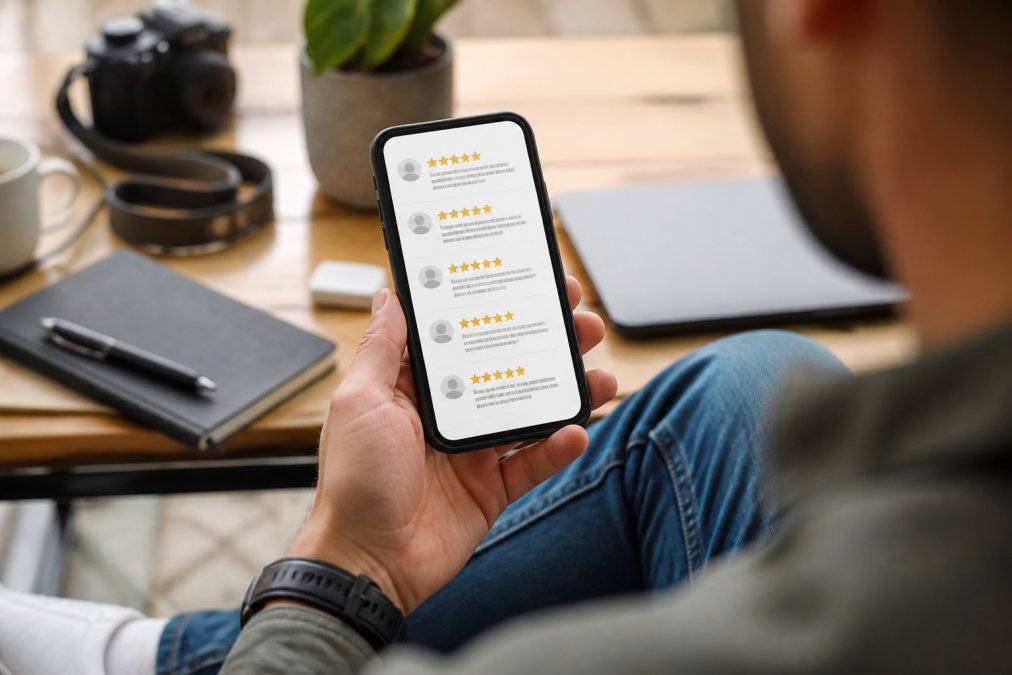
Fake reviews are manufactured feedback designed to inflate a product's rating. They're common on marketplaces where sellers control their own listings, and they're getting harder to detect because some are written by real accounts paid to post.
Watch for these signals:
- A burst of five-star reviews posted within a few days of each other
- Reviewers with no history, no photos, and generic praise ("Great product!")
- Perfect ratings with almost no critical feedback at all
- Reviews that describe shipping speed but never the product itself
- Identical phrasing across multiple reviews
Verified reviews, meaning reviews tied to a confirmed purchase, carry more weight than anonymous ones. Read the two- and three-star reviews first. They tend to describe real use, real flaws, and real expectations.
How to Avoid Online Shopping Scams
Online shopping scams succeed by removing your protections: no tracked shipping, no return address, no way to dispute the charge. The core defense is simple. Pay through platforms that offer buyer protection, and never wire money or pay by gift card for a product you haven't received.
Before buying from an unfamiliar seller, check:
- A physical business address, not just a contact form
- A written return policy with a stated window
- Consistent branding across the site and its social profiles
- Real customer photos in reviews, not just studio shots
- A working customer service channel you can test before ordering
If a deal looks far below what everyone else charges, treat that as a warning rather than a win. Scam listings are priced to trigger exactly that reaction.
FTC consumer advice on online shopping scams
Red Flags in Product Descriptions and Photos
Product listings that hide information are usually hiding something. Vague material descriptions ("premium fabric," "high-grade material") say nothing about composition. Missing dimensions, no weight listed, and photos that never show the product in a real room or car are all signals that the seller is avoiding specifics.
Compare the listing against what a good one includes:
| Red Flag | What It Usually Means | What to Do |
|---|---|---|
| No material composition listed | Unknown durability and safety | Ask the seller directly |
| Only studio or stock photos | Product may differ in reality | Look for customer photos |
| No dimensions or weight | Fit and scale are guesses | Request exact specs |
| No return policy stated | Returns may be refused | Buy elsewhere |
| Pressure countdown timers | Manufactured urgency | Slow down and compare |
A listing that answers your questions before you ask them is a listing from a seller who expects you to keep the product.
Checking Material Composition and Product Specifications
Material composition determines how a product ages, how it feels, and whether it's safe for its intended use. A tote bag described only as "canvas" could be heavy cotton or a thin synthetic blend that pills within weeks. A car interior accessory with no stated materials could off-gas or fade in sunlight.
Ask for specifics before you buy:
- Exact material percentages, not general categories
- Product specifications including dimensions, weight, and load limits
- Third-party testing claims, with the testing body named
- Care instructions, which reveal how fragile the item really is
- Compatibility details for anything vehicle-specific
For car accessories in particular, compatibility information matters more than anything else in the listing. If a seller can't tell you exactly which models and years a part fits, that's your answer.
The Psychology of Deal Hunting and Its Hidden Costs
The thrill of a discount is a designed response, not a rational one. Retailers engineer online storefronts to trigger specific cognitive biases that compress your decision time and bypass the verification steps that protect you. Understanding these mechanisms is the first step to defusing them.
Anchoring is the most common. A listing shows a "original price" of $89.99 crossed out next to a sale price of $29.99. Your brain anchors on the $89.99 and evaluates the $29.99 as a win, even if the product was never worth more than $30. The anchor is arbitrary; the seller sets it. A useful counter: ignore the crossed-out price entirely and ask what you would pay for the item if no discount were shown.
Scarcity bias exploits the fear of missing out. "Only 3 left in stock" and countdown timers create artificial urgency. In reality, most e-commerce platforms let sellers set inventory thresholds and timer durations manually. When you see a countdown, assume it will reset. The scarcity is a UI element, not a supply fact.
Loss aversion makes a limited-time offer feel like a loss if you don't act. "Deal ends in 2 hours" reframes not buying as losing money, when in fact not buying is the neutral choice. The only real loss is buying something you didn't need.
Social proof turns review counts and "1,000+ sold" badges into shortcuts for trust. But volume sold is not quality; it often just means the listing has been running longer or the seller has paid for placement. A product with 5,000 sales and a 3.8-star average is a warning, not a recommendation.
These biases don't just cost you the purchase price. The hidden costs of cheap goods show up later:
- Replacement purchases when the first one fails
- Return shipping you pay yourself
- Time spent disputing charges or chasing refunds
- Storage space taken up by items you never use
- The environmental cost of a short product lifecycle
Price-to-quality ratio matters more than price alone. A well-made item that lasts three years often costs less per year than three cheap replacements. That's the calculation deal hunting skips.
A practical way to break the cycle is to track price history. Browser extensions like CamelCamelCamel (for Amazon) and Keepa show whether a "sale" price is actually lower than the product's typical 90-day range. If the current price is within 5% of the historical average, the discount is cosmetic. These tools are free and non-biased; they simply display the data the seller hopes you won't check.
FTC guidance on deceptive pricing and fake urgency
Post-Purchase Verification and Return Policies
The purchase isn't the finish line. Most quality problems reveal themselves in the first 72 hours of real use, and the return window is your only leverage. Inspect and test what arrives while you still have recourse.
Start with a visual and tactile inspection the day the package arrives. Check seams for loose or skipped stitches; run a fingernail along them. Flex rigid plastic parts; cheap polypropylene whitens at stress points. Smell the product; a strong chemical odor often indicates low-grade adhesives or off-gassing materials. Compare the item against the listing photos, not just the hero shot but the detail images. If the color, texture, or hardware differs, document it immediately with photos.
Then run a functional stress test appropriate to the product:
- Textiles and bags: Load them to their stated capacity and carry them for 10 minutes. Check strap attachment points and zipper smoothness. Wash once according to care instructions; if the item pills, fades, or shrinks beyond the stated tolerance, return it.
- Car accessories: Test fitment before removing any protective film. Check that clips, adhesives, or mounting points align with your exact model, year, and trim. If it's a "universal" part, test it without committing; most universal-fit interior pieces fail at the first temperature change.
- Mechanical or load-bearing items: Cycle them 20-30 times (open/close, extend/retract, tighten/loosen). Listen for grinding or uneven resistance. Test at the low and high ends of their stated range.
- Electronics and powered items: Charge fully, run a full discharge cycle, and check for overheating at the adapter and battery. Test every port and button, not just the main function.
Document everything. Take dated photos and a short video of any defect. Most platforms require evidence for a return, and sellers often dispute claims without it. Keep the original packaging until you're satisfied; some return policies require it.
A clear return policy is a quality signal in itself. Sellers who stand behind their products state the window, the conditions, and who pays return shipping, in plain language, before you order. Look for a window of at least 30 days, a "no questions asked" clause, and prepaid return labels. If the policy is buried, vague, or requires you to contact the seller for "approval," treat that as a red flag.
If a product fails your inspection, initiate the return immediately and keep the tracking number. If the seller stalls, escalate to the platform's buyer protection team and, if needed, your payment provider. The FTC's consumer advice page outlines your rights for online purchases, including the rule that sellers must ship within the stated time or offer a refund.
[FTC consumer advice on online shopping(/blogs/news/how-to-avoid-online-shopping-scams) returns and refunds | consumer.ftc.gov]
Conclusion: Smarter Shopping for Lasting Quality
Avoiding low quality lifestyle products online comes down to slowing down at the right moments: reading reviews critically, demanding material specifics, verifying seller credibility, and inspecting what arrives. None of these steps take long, and together they filter out most of what you'd regret buying.
Munk'Goods offers a curated selection of products designed to meet your needs from east to west. We specialize in providing high-quality items, including a dedicated range of car accessories to enhance your driving experience. Discover our collection today and find the perfect goods to complement your lifestyle. Continue shopping with Munk'Goods and find goods that hold up long after the unboxing.
Frequently Asked Questions
What are the red flags of low-quality online products?
Watch for prices far below market average, vague product descriptions, and missing material composition details. Stock photos that look too perfect are another sign. Check if the seller lists certifications or third-party testing. A lack of verified reviews or a sudden influx of five-star ratings can also indicate low quality. Always inspect the return policy; a restrictive or unclear policy often signals the seller knows the product may disappoint. These red flags help you avoid low quality products before you buy.
How can I tell if an online store is selling counterfeit goods?
Counterfeit goods often come with spelling errors, poor packaging, and missing brand authenticity markers. Check the seller's reputation and look for an official website. If the price is too good to be true, it likely is. Look for third-party testing seals or verification codes. Read customer feedback carefully; complaints about durability or safety hazards are common. A legitimate store will have clear contact information and a transparent supply chain. When in doubt, buy from a trusted retailer like Munk'Goods.
Why do online lifestyle products often look better in photos than in person?
Online sellers use professional lighting, styling, and photo editing to make products look ideal. Mass production often leads to inconsistencies that photos hide. The material composition may differ from what's shown. To avoid disappointment, look for user-generated photos in reviews. Check the product specifications and dimensions carefully. Read verified reviews that mention how the item looks in real life. This helps you judge the price-to-quality ratio and avoid low quality products that only look good on screen.
How do customer reviews help in identifying low-quality items?
Customer reviews reveal real-world experiences with product durability and performance. Look for detailed reviews that mention specific issues like poor stitching or toxic chemicals. Verified reviews are more trustworthy. Analyze feedback patterns: if multiple reviewers mention the same flaw, it's a red flag. Reviews also highlight seller reputation and return policy ease. Use tools to spot fake reviews online, such as checking reviewer history. Genuine reviews help you assess long-term value and avoid low quality products.