
Table of Contents
- Why Car Accessory Compatibility Matters More Than You Think
- Start With Your Vehicle Identification Number: Using VIN to Check Part Compatibility
- Universal vs Vehicle-Specific Car Accessories: The Real Difference
- How to Use Online Fitment Databases and Vehicle Selectors
- Common Pitfalls in Aftermarket Part Selection and How to Avoid Them
- How to Avoid Online Shopping Scams for Car Parts
- Your 5-Step Verification Checklist Before You Order
- The Bottom Line on Fitment
- Frequently Asked Questions
Last Updated: September 5, 2026
Ordering the wrong part is a rite of passage for many car owners, but it doesn't have to be. Verifying car accessory compatibility before you click "buy" saves you from restocking fees, return shipping costs, and the frustration of a box that doesn't fit. At Munk'Goods, we understand this problem, which is why we put together this practical guide to confirm fitment the right way.
Why Car Accessory Compatibility Matters More Than You Think
Most people assume that if a product listing says it fits their car model, it will bolt right on. That assumption is where the trouble begins. Compatibility goes beyond make and model; it involves the specific trim level, engine code, production month, and even the chassis code.
A rear-view camera bracket for a 2018 model might not fit a 2019 refresh, even if the car looks identical. Mounting points can shift, the electrical connector can change, and the wiring harness can be routed differently. Checking OEM specifications against your vehicle's details is non-negotiable.

The real cost of getting this wrong is rarely the part itself. Many online retailers enforce restocking fees of 15% to 25% on returned auto parts, and you will likely cover return shipping (the FTC).
Start With Your Vehicle Identification Number: Using VIN to Check Part Compatibility
Your Vehicle Identification Number is the single most reliable key to correct fitment. Using VIN to check part compatibility is the gold standard because it encodes your exact engine, drivetrain, body style, and factory options.
Enter your VIN into a vehicle selector or compatibility checker, and the system will filter products against manufacturer guidelines for that specific build. This is far more accurate than selecting "Toyota Camry" from a dropdown and hoping for the best.
Where to Find Your VIN and How to Read It
You can find your VIN in three primary locations: on the dashboard near the windshield on the driver's side, on a sticker inside the driver's side door jamb, and on your vehicle registration documents. The door jamb sticker is the most useful for accessory shopping because it also lists the build date and trim level.
While you do not need to decode every character, positions 4 through 9 reveal the model, body style, engine type, and a check digit. The tenth character indicates the model year. Knowing your production month versus the model year matters because manufacturers often make running changes mid-cycle.
Universal vs Vehicle-Specific Car Accessories: The Real Difference
The term "universal" is the most dangerous word in the aftermarket accessory vocabulary. Universal vs vehicle-specific car accessories determines whether you get a clean, secure install or a wobbly compromise. Truly universal parts, like seat belt covers or gear shift decorations, attach without altering the vehicle.

Vehicle-specific accessories, such as custom seat covers, are engineered around the exact contours and mounting hardware of a particular model. For example, seat covers for a MINI Cooper R series have cutouts that align with the side airbags and seat controls. A "universal" cover might block the airbag deployment path, a serious safety concern (nhtsa.gov).
If a listing says "fits Corolla, Yaris, Prius, Camry," it is likely a generic part using a common mounting point, like a license plate lamp bracket. These can work, but you must verify the mounting hardware and electrical connector match your vehicle. Check the spec sheet and vehicle selector to confirm the part number cross-reference before ordering.
How to Use Online Fitment Databases and Vehicle Selectors
Online fitment databases are powerful tools, but only as good as the data you feed them. The best approach is to use a vehicle selector that requires your full VIN rather than just the make and model.
When you land on a product page, look for a compatibility checker or fitment guide. Enter your VIN and review the results. A reliable database will confirm whether the part fits your exact configuration and often list the specific years and sub-models it covers. If the site only offers a generic "check fitment" button asking for just the year and model, treat the result with healthy skepticism.
Reading Manufacturer Compatibility Charts Correctly
Compatibility charts look simple, but they hide a lot of detail. A chart listing "2001 to 2016" for a MINI Cooper seat cover seems straightforward, but it covers multiple generations with different chassis codes. The R50 and R53 models differ from the R56, and each has unique seat mounting points.
The correct way to read a chart is to match three things: the exact model generation, the body style, and the year range. If you drive a 2007 MINI Cooper, you need to know whether that falls in the R50 or R56 generation, as the switch happened mid-decade. When in doubt, cross-reference the part number with the OEM catalog to confirm the chassis code matches.
Common Pitfalls in Aftermarket Part Selection and How to Avoid Them
Most fitment guides stop at 'check your VIN,' but the real-world failures happen after that step. The most common pitfalls fall into three categories: trusting the title over the spec sheet, ignoring physical mounting geometry, and overlooking software dependencies.
Pitfall 1: Trusting the Product Title Over the Spec Sheet
A listing might scream "For Toyota Camry" in the title, but the description reveals it fits only the 2018-2020 model years with the 2.5L engine. If you own a 2021, you are out of luck. Build a habit of reading the 'fitment notes' or 'compatibility' tab before adding anything to the cart. Look for three data points: the chassis code (e.g., XV70 for the Camry), the engine code (e.g., A25A-FKS), and the production date range. If any are missing or vague, treat the listing as suspect.
Pitfall 2: Ignoring the Physical Mounting Points
This is the gap most online guides miss. Even if the part number matches, the physical mounting points may differ due to a mid-cycle refresh or factory option package. Before ordering, do a visual inspection of your vehicle's existing hardware. For example, if buying a roof rack crossbar, look at your roof rails: are they flush, raised, or absent? A crossbar for raised rails will not clamp onto a flush rail system. The same logic applies to side steps, mud flaps, and tow hitches.
Here is a simple 60-second visual check you can perform right now:
- Locate the mounting area on your vehicle (e.g., the door sill for side steps, the bumper for a hitch).
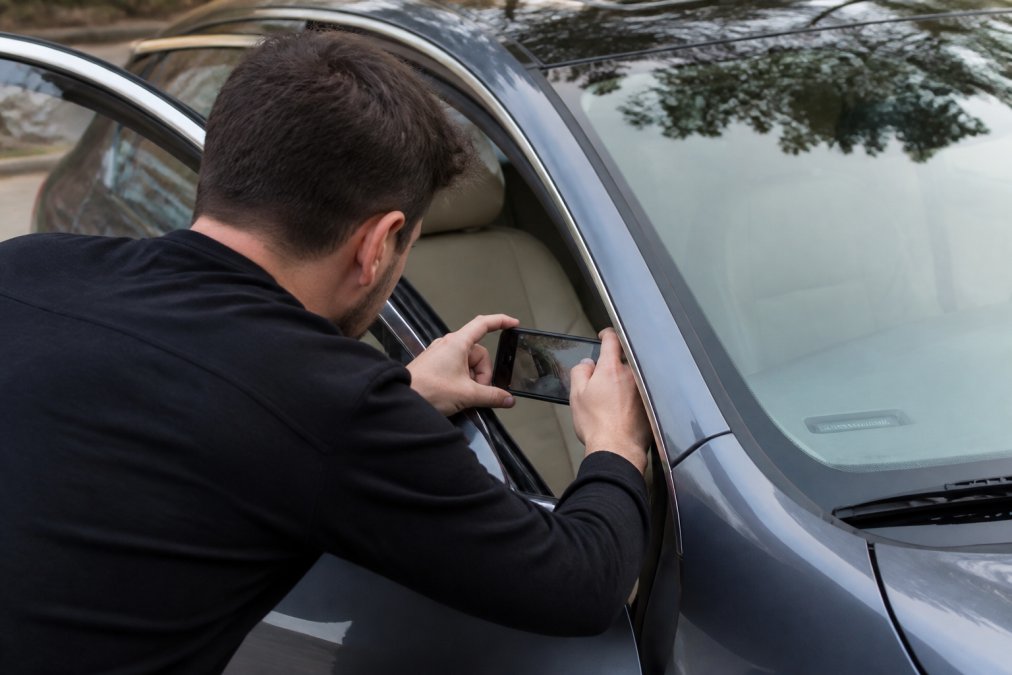
- Take a photo with your smartphone, zooming in on the bolt holes or clips.
- Compare your photo side-by-side with the product images on the listing. Look for the number of bolt holes, their spacing, and the shape of the mounting bracket.
- Check for obstructions like wiring harnesses, fuel lines, or trim panels that might block the accessory.
Pitfall 3: Overlooking Electrical Connector Types and Software Versions
Modern accessories are no longer just mechanical parts. A dash cam, parking sensor kit, or upgraded infotainment screen often requires a specific CAN-bus adapter or a minimum firmware version on your vehicle's head unit. A common pattern is a reverse camera bracket that physically fits the license plate housing but uses a 4-pin connector when your vehicle's harness uses a 6-pin configuration (sae.org).
Before ordering any electronic accessory, check the listing for the connector type. Look for terms like 'plug-and-play' versus 'requires hardwiring' or 'adapter not included.' If the accessory has a software component, verify that your vehicle's current software version is listed as compatible. Most manufacturers publish this in the product manual or a support page. If you cannot find this information, contact the seller directly and ask for the specific connector pinout and software version requirement.
The Financial Safety Net: Return Policies and Restocking Fees
The silent killer of aftermarket purchases is the restocking fee. Many online retailers charge between 15% and 25% on returned auto parts, and some exclude electrical components from returns entirely. Before entering your payment details, navigate to the return policy page and look for three keywords: 'restocking fee,' 'final sale,' and 'installer error.' If parts are non-returnable after installation and you are not 100% sure of the fit, consider buying from a retailer that offers a 'fitment guarantee' or a free return window.
How to Avoid Online Shopping Scams for Car Parts
Shopping for car parts online attracts a specific breed of scam, and knowing how to avoid online shopping scams for car parts is a skill worth developing. The most common red flag is a price dramatically lower than every other listing for the same part. If it seems too good to be true, it is likely a counterfeit or a stolen listing.
Look for real customer reviews with photos. A product page with dozens of five-star reviews but no images should raise suspicion. Genuine buyers usually post photos of the part installed in their vehicle, giving you visual confirmation of fitment and quality. If you cannot find any independent reviews of the product or seller, move on.
Secure payment methods are your best defense. Use a credit card or a platform like Shopify that offers buyer protection, rather than wiring money or using peer-to-peer payment apps. Before you commit, verify the seller's return policy and warranty claims in writing. A legitimate retailer will have a clear, published policy and a responsive customer service team.
Your 5-Step Verification Checklist Before You Order
This checklist is your final gate before checkout. It expands beyond the basic VIN check to include the physical and digital verification steps that prevent the most frustrating returns. Run through this sequence every time, it takes less than five minutes and eliminates nearly all fitment errors.
Step 1: Lock Down Your Vehicle's Identity
Locate your VIN and note the model year, trim level, and build date from the door jamb sticker. Do not rely on memory. Write down the chassis code (e.g., E90 for a BMW 3 Series) and the engine code (e.g., N52). These two codes are the keys to accurate fitment data across all aftermarket brands.
Step 2: Run the VIN Through a Fitment Database
Use a vehicle selector that accepts your full 17-character VIN, not just the make and model. This filters out variations in trim level and engine code that cause most compatibility failures. If the retailer's tool only asks for the year and model, treat the result as a starting point, not a confirmation.
Step 3: Cross-Reference the Part Number with the OEM Catalog
This is the step that separates professionals from amateurs. Take the part number from the aftermarket listing and search for it in the official OEM parts catalog for your vehicle's make. Many manufacturers offer free online parts diagrams. Look up your specific chassis code and find the corresponding part. If the OEM part number matches the aftermarket reference number, you have a high-confidence fit. If the aftermarket listing does not provide an OEM cross-reference number, that is a red flag.
Step 4: Perform the Physical and Digital Compatibility Check
Physical Check: Go to your vehicle and visually inspect the mounting area. Take a photo of the bolt holes or clips and compare them to the product images. Confirm the number of mounting points and their spacing.
Digital Check: For any accessory with an electrical or software component, verify the connector type and the required software/firmware version. Look for the specific CAN-bus protocol or plug-and-play connector mentioned in the listing. If the accessory requires a minimum infotainment firmware version, check your vehicle's current version in the settings menu. A mismatch here means the part will not function even if it bolts on perfectly.
Step 5: Review the Return Policy and Financial Risk
Before you enter your payment details, read the return policy for three keywords: 'restocking fee,' 'final sale,' and 'installer error.' If the part is expensive or the fit is uncertain, calculate the potential restocking fee (often 15-25%) plus return shipping. If that total is more than you are willing to lose, consider buying from a retailer with a fitment guarantee or a free return window.
| Verification Step | What to Check | Why It Matters |
|---|---|---|
| 1. Vehicle Identity | VIN, chassis code, engine code, build date | Encodes exact factory configuration |
| 2. VIN Lookup | Full 17-character VIN in a fitment database | Filters out trim and engine variations |
| 3. OEM Cross-Reference | Aftermarket part number vs. OEM catalog | Confirms the part is designed for your exact chassis |
| 4. Physical & Digital Check | Mounting point photos, connector type, firmware version | Catches mid-cycle refreshes and software mismatches |
| 5. Return Policy Review | Restocking fees, final sale exclusions, installer error clauses | Protects your budget from a failed fit |
The Bottom Line on Fitment
Verifying car accessory compatibility is a skill that separates savvy buyers from frustrated ones. The process comes down to using your VIN as the source of truth, understanding the difference between universal and vehicle-specific parts, and reading the fine print in the specifications and return policy. For a curated selection of car accessories with clear compatibility details, Munk'Goods offers a dedicated range designed to enhance your driving experience without the guesswork. Get started with Munk'Goods and find accessories that fit your vehicle and your style the first time.
Frequently Asked Questions
How do I check if a car accessory is compatible with my specific vehicle model?
Start with your VIN. It's the most precise way to identify your exact model, trim level, and engine code. Enter it into the online fitment tool on the product page. Then, check the manufacturer's compatibility chart for your model year and trim. If the chart only lists a range like '2001 to 2016,' contact the seller to confirm your specific build date and trim level before ordering.
What is the difference between universal and vehicle-specific car accessories?
Universal accessories are designed to fit a broad range of vehicles. They often require modifications like cutting, drilling, or adjusting mounting hardware. Vehicle-specific parts are manufactured to exact OEM specifications for a particular model and trim level. They are usually plug-and-play, meaning they install without extra work. Universal parts can save money, but they carry a higher risk of a poor fit or needing additional hardware.
What should I do if a product description doesn't list my car model?
Do not assume it will fit. A missing listing is a red flag. First, check the seller's fitment guide or vehicle selector. If your car isn't listed, contact the seller directly with your VIN and ask for confirmation. Before you order, also review the return policy to understand restocking fees. If you can't get a clear answer, it is safer to look for a part that explicitly lists your vehicle.
How do I know if an aftermarket stereo will fit my dashboard and work with my car?
Check the stereo's specifications for a dash kit, which is a plastic frame that bridges the gap between the new unit and your car's dashboard opening. You also need a wiring harness adapter to connect the stereo without cutting your car's factory wires. Confirm your car supports the features you want, like steering wheel controls or Apple CarPlay, as these often require additional modules to retain functionality.
This article was written using GrandRanker