
Table of Contents
- Why Securing Your Dog in the Car Matters
- Safest Place for a Dog in a Car
- Best Dog Car Harness for Road Trips
- Dog Travel Crate for Car: Setup and Selection
- How Often to Stop on a Road Trip With a Dog
- Other Restraint Options: Seats, Hammocks, and Carriers
- Pre-Drive Safety Checklist and Common Mistakes
- Preparing Your Dog for Comfortable Travel
- Frequently Asked Questions
Last Updated: October 5, 2026
Why Securing Your Dog in the Car Matters
An unsecured dog becomes a projectile in sudden stops or crashes, distracts you while driving, and may jump out at rest stops. A secure dog in car setup prevents these dangers.
A secure dog in car setup protects your dog's life, your safety, and others on the road by preventing lunging, climbing into your lap, or flying forward during emergency braking.
The right restraint system depends on your dog's size, temperament, and trip length. Options include harnesses, crates, seat protectors, and hammocks, match the method to your dog's needs and vehicle layout.
Safest Place for a Dog in a Car
The back seat is the safest place for your dog, keeping them away from airbags that deploy with enough force to injure a pet, and giving them room to settle without distracting you.
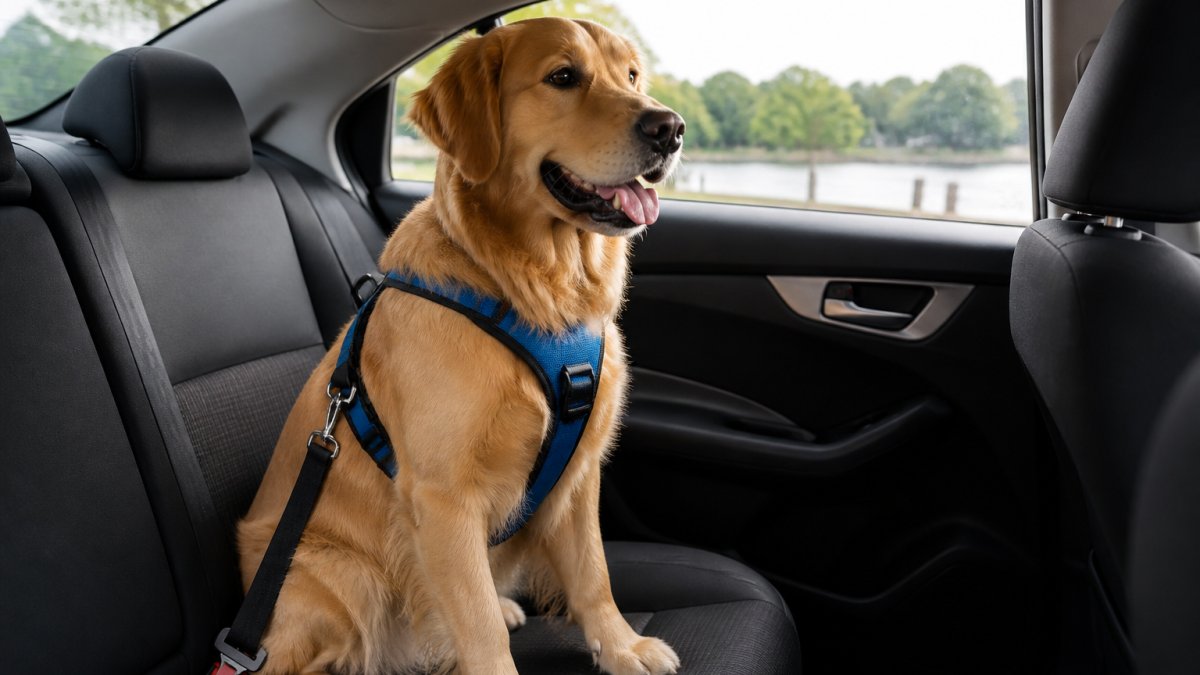
Front seats are never appropriate for dogs. Airbags deploy at 200 mph and can cause serious injury or death. Turning off the airbag switch doesn't make the front seat safe.
Back Seat vs Front Seat
The back seat wins for safety and driver focus, your dog can't bump the steering wheel or distract you during critical moments, and experiences less traumatic movement during hard braking.
Using Barriers and Nets
A car barrier or net separates the cargo area from the passenger cabin in SUVs or wagons, keeping your dog contained and preventing them from climbing into the passenger area.
Barriers confine your dog to a space but don't restrain them directly. Your dog still needs a harness, crate, or seat protector within that space, as a barrier alone won't protect them in a crash.
Best Dog Car Harness for Road Trips
A harness designed for car travel attaches to your vehicle's seat belt system, keeping your dog in the back seat while allowing movement and taking up minimal space.
The best harnesses are crash-tested (evaluated in simulated accidents) or vehicle-compatible (designed for specific seat belt systems). Both are superior to standard walking harnesses, which aren't designed for vehicle forces.
A good harness should:
- Attach securely to the seat belt
- Distribute force across your dog's chest and shoulders
- Allow your dog to sit, lie down, and turn around
- Prevent your dog from reaching the front seats or windows
- Stay in place during sudden stops
How to Fit and Attach a Harness
Position your dog in the back seat and thread the harness attachment clip through the seat belt buckle. Pull the seat belt tight. The harness should be snug but not restrictive, fit one finger between the harness and your dog's body. A loose harness won't protect in a crash; an overly tight one restricts breathing.
Check the fit before every road trip:
- Can your dog sit comfortably? Yes.
- Can they lie down? Yes.
- Can they turn their head to look out the window? Yes.
- Can they reach the front seats? No.
- Does the harness shift or slide when you gently tug it? No.
Dog Travel Crate for Car: Setup and Selection
A crate provides complete containment and protection by confining your dog to a secure space that absorbs impact force. Crates work especially well for anxious dogs or those prone to motion sickness.
Hard plastic crates are more durable and provide better protection in accidents. Soft-sided carriers are lighter and easier to move but offer less structural support.
Choosing the Right Size Crate
Your dog should be able to stand, turn around, and lie down comfortably. A crate that's too small restricts movement; one that's too large allows sliding during driving, reducing safety.
Measure your dog:
- Length from nose to rump (not including tail)
- Height from floor to top of head when standing
- Add 4 inches to each measurement
- Look for a crate with interior dimensions that match these numbers
Munk'Goods carries the Car Kennel for Dogs Cats Small Pets and Portable Plastic Pet Carrier Durable, both designed for safe car travel. The plastic carrier is durable and portable, making it ideal for regular road trips or vet visits.


Securing the Crate in Your Vehicle
A crate that slides around during driving defeats its purpose. Secure it firmly to your vehicle using the seat belt or cargo tie-downs.
For back seat placement, position the crate flush against the seat and thread the seat belt through its handles, pulling tight. For cargo areas, use cargo tie-downs or ratchet straps to secure it to anchor points.
How Often to Stop on a Road Trip With a Dog
Stop every 2-3 hours for bathroom breaks, water, and movement.
Rest Break Schedule and Duration
A 15-20 minute break is usually enough. Let your dog out in a safe area away from traffic on a leash, as unfamiliar surroundings and travel stress can make dogs unpredictable.
For longer trips (6+ hours), plan 30-45 minute rest periods. For very long trips (8+ hours), consider breaking the journey into two days to reduce stress and improve driver safety.
Car Seat Pet Protection Travel Carrier →
Managing Bathroom Breaks and Hydration
Bring a collapsible water bowl and fresh water. Offer water at each stop but don't leave a full bowl in the car. Learn your dog's bathroom pattern before the trip to plan stops accordingly.
Avoid feeding your dog right before travel. Feed them 3-4 hours before departure and again after you've settled at your destination. This reduces the risk of motion sickness and bathroom accidents.
Other Restraint Options: Seats, Hammocks, and Carriers
Beyond harnesses and crates, several other restraint systems work for car travel. Each has different advantages depending on your dog's size, temperament, and your vehicle type.
Dog Car Seats and Slings
Dog car seats are elevated platforms that work best for small dogs (under 15 pounds).
Dog slings hang from front seat headrests and cradle your dog between the front seats, working for small to medium dogs.
The Munk'Goods Car Seat Pet Protection Travel Carrier combines a car seat with a carrier design, giving you flexibility for different travel situations.

Hammocks and Seat Protectors
Hammocks stretch across the back seat and prevent your dog from sliding on slippery seats. Seat protectors are waterproof covers that protect upholstery but don't restrain your dog, use them alongside another restraint system.
Pre-Drive Safety Checklist and Common Mistakes
Before every road trip, run through a quick safety check. This takes five minutes and prevents most travel problems.
What to Check Before Departure
- Restraint system secure: Harness attached and adjusted, crate locked down, barrier in place
- Identification current: Collar tag with your phone number, microchip information up to date
- Water and supplies: Collapsible bowl, fresh water, food, medications, first aid kit
- Vehicle comfort: Air conditioning works, windows can be cracked for ventilation, temperature is appropriate
- Emergency contacts: Vet phone numbers, pet poison control, emergency clinics along your route
- Recent photo: Keep a recent photo of your dog in case they escape and you need to post missing pet alerts
Mistakes That Compromise Safety
Leaving windows fully open: Your dog can jump out or get debris in their eyes. Crack windows just enough for air circulation. Letting your dog roam freely: Unrestrained dogs cause accidents and distraction. Using a retractable leash: These tangle easily. Use a short, fixed leash. Skipping rest breaks: This increases stress, motion sickness, and behavioral problems. Overheating the car: Never leave your dog unattended in a parked car.
Preparing Your Dog for Comfortable Travel
A dog who's comfortable in the car is safer and less stressed. Preparation starts weeks before your trip, not the day you leave.
Managing Anxiety and Motion Sickness
Some dogs get anxious or motion sick during car travel. This is common and manageable with preparation.
Start with short drives, 10-15 minutes, a few weeks before your road trip.
Motion sickness often improves with familiarity. If your dog vomits or drools excessively during drives, talk to your vet.
Keep the car cool and well-ventilated. A hot, stuffy car makes motion sickness worse.
Packing Travel Supplies and Essentials
Pack these items before every road trip:
- Fresh water and a collapsible bowl
- Dog food and treats (bring enough for the full trip plus extra)
- Medications and supplements your dog takes regularly
- Collar, leash, and ID tags
- Waste bags for bathroom breaks
- Favorite toy or blanket (familiar items reduce stress)
- First aid kit with bandages, antiseptic, and any medications for common issues
- Recent photo of your dog in case they escape
- Vaccination records (some hotels and rest areas require proof)
Keep supplies organized in a bag or container so you can grab what you need at each stop. A well-prepared trip is a safe trip.
| Preparation Task | Timing | Benefit |
|---|---|---|
| Short practice drives | 4-6 weeks before trip | Reduces anxiety and motion sickness |
| Vet checkup | 2-3 weeks before trip | Identifies health issues before travel |
| Update ID tags and microchip | 2 weeks before trip | Ensures your dog can be identified if lost |
| Practice with restraint system | 1-2 weeks before trip | Confirms proper fit and function |
| Pack supplies | 1-2 days before trip | Ensures nothing is forgotten |
| Final safety check | Day of departure | Catches last-minute issues |
Securing your dog in the car transforms a stressful situation into a manageable one. The right restraint system keeps your dog safe during sudden stops and crashes. Regular rest breaks prevent motion sickness and behavioral problems.
At Munk'Goods, we understand that road trips with your dog require practical solutions. Our Car Kennel for Dogs Cats Small Pets and Car Seat Pet Protection Travel Carrier are designed for exactly this purpose, giving your dog a safe, comfortable space while you drive.
Frequently Asked Questions
What's the safest way to secure a dog in a car for a long road trip?
The safest approach combines a crash-tested restraint with proper positioning. Place your dog in the back seat using a seat-belt harness, travel crate, or barrier system. Back-seat placement protects your dog from airbag deployment and keeps them away from driver distraction. Ensure the restraint is snug but comfortable, and check that it doesn't restrict your dog's ability to sit, stand, or lie down. Test the setup before your trip to confirm your dog feels secure.
How often should you stop on a road trip with a dog?
Stop every 2-3 hours for bathroom breaks, hydration, and movement. Most dogs can hold their bladder for 4-6 hours, but younger puppies and senior dogs may need more frequent breaks. During each stop, let your dog stretch, walk on a leash, drink water, and relieve themselves. For trips longer than 6 hours, aim for at least two substantial rest periods where your dog can exercise and decompress. Consistent breaks reduce anxiety and motion sickness.
Should my dog travel in a crate or wear a car harness?
Both are safe options when properly installed. A travel crate works best for dogs that are crate-trained and smaller in size, offering a contained space that reduces anxiety. A seat-belt harness suits dogs of various sizes and allows more visibility during the drive. Choose based on your dog's size, temperament, and crate familiarity. Crates provide more containment for anxious dogs; harnesses offer easier access for frequent stops. Either option is better than an unsecured dog, which poses safety risks to all vehicle occupants.
Can my dog ride in the passenger seat of a car?
It's not recommended. Front-seat placement exposes your dog to airbag deployment, which can cause serious injury or death. Airbags deploy at high speeds and can injure even large dogs. The back seat is always safer because it's farther from airbag zones and reduces driver distraction. If your vehicle has a front passenger airbag disable feature, consult your vehicle manual before considering front-seat travel. For maximum safety, always position your dog in the back seat with a proper restraint.