
Table of Contents
- What Makes Durable Tote Bags Worth Buying for Daily Travel
- Airline Personal Item Dimensions: What Actually Fits
- Best Travel Tote with Laptop Compartment: What to Look For
- Lightweight vs. Structured Durable Tote Bags: Which Suits You
- How to Organize a Travel Tote Bag Properly
- Ergonomic Weight Distribution and Strap Design
- Tote Bag Maintenance and Cleaning Tips
- Frequently Asked Questions
Last Updated: August 31, 2026
What Makes Durable Tote Bags Worth Buying for Daily Travel
Durable tote bags for daily travel are bags engineered to handle repeated stress across multiple use cases: airport runs, daily commutes, gym sessions, and grocery hauls without showing signs of failure at the seams, zippers, or handles. Most bags look fine in product photos. The real test is what happens after six months of daily use.
At Munk'Goods, we've put together this guide to help you cut through the noise and find a tote that actually holds up. Below, we break down materials, airline compliance, organization, and ergonomics so you can make a confident choice rather than a costly mistake.
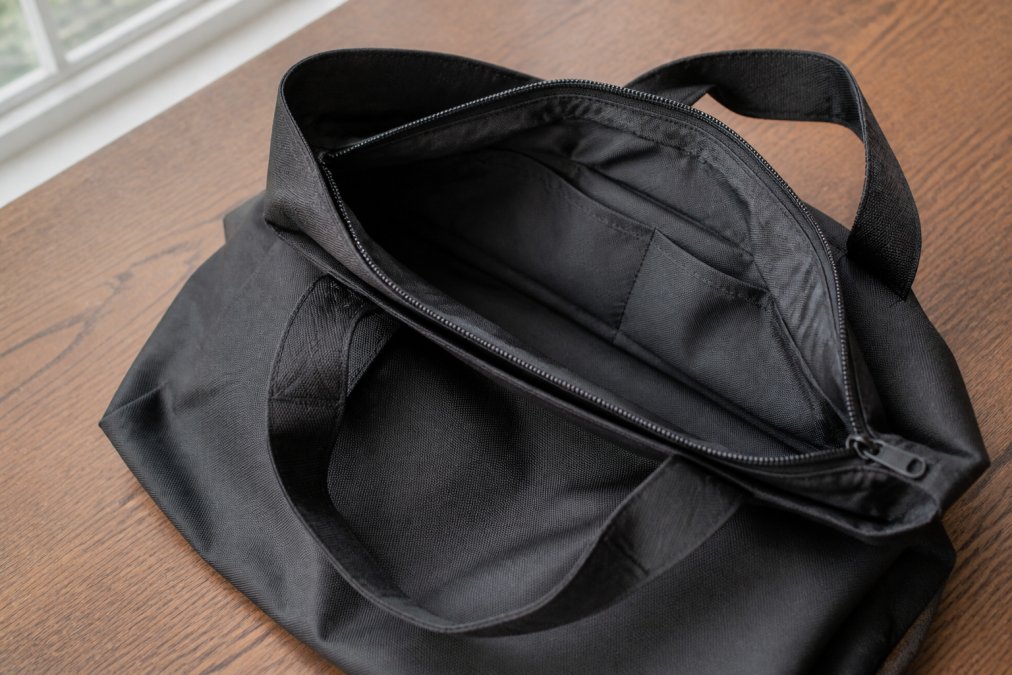
The core argument here is simple: most people underestimate how much wear a daily travel tote takes. A bag that works for weekend trips fails fast when it becomes your everyday carry. That's the gap this guide addresses.
Material Breakdown: Nylon, Canvas, and Polyester Compared
The material is the single biggest predictor of long-term durability. Here's how the three most common options compare:
Nylon is the gold standard for travel. It's lightweight, water-resistant by nature, and resists abrasion better than most alternatives. High-denier nylon (400D and above) handles the kind of daily punishment that ruins cheaper bags within months. The downside: it can feel less structured, which matters if you're carrying a laptop.
Canvas is heavier but gives bags a more structured shape. Waxed canvas adds water resistance without synthetic coatings. It develops character over time rather than degrading. The trade-off is weight: a canvas tote adds bulk before you've packed anything.
Polyester is the most common material at lower price points. It's not a bad choice when the denier count is high enough. The Munk'Goods Cute Mole Cartoon Tote Bag uses a polyester construction with a polyester lining, offering a lightweight, casual-tote option for daily use and travel at just $3.97. It won't replace a structured nylon travel tote, but for everyday errands, grocery runs, and light travel, it's a practical pick.

| Material | Weight | Water Resistance | Structure | Best For |
|---|---|---|---|---|
| High-denier nylon | Light | Good | Flexible | Daily commuting, travel |
| Waxed canvas | Heavy | Excellent | Structured | Weekend trips, style-focused use |
| Polyester | Very light | Moderate | Slouchy | Casual daily use, grocery |
Hardware, Stitching, and Long-Term Wear
Most tote bags fail at the same three points: handle attachment, zipper closure, and base corners. These are the stress points that separate a bag that lasts two years from one that lasts two months.
What to look for:
- Bar-tack stitching at handle attachment points. This cross-hatch reinforcement distributes load instead of concentrating it at a single thread.
- YKK or equivalent zippers on the main compartment. Generic zippers jam, split, or lose their pull within months of daily use.
- Reinforced base panels or feet. The bottom of a travel tote contacts every surface from airport floors to overhead bins.
- Metal hardware over plastic. Plastic D-rings and clips crack under load. Metal costs more but lasts indefinitely.
A common mistake is judging stitching quality by thread count alone. What actually matters is thread tension and stitch density at stress points, not across the body of the bag.
Airline Personal Item Dimensions: What Actually Fits
Most airlines allow a personal item in addition to a carry-on, and a well-chosen tote bag fills that slot perfectly. The specific dimensions vary by carrier, which is where most guides leave you hanging.
According to TSA personal item guidance and airline dimension policies, personal item requirements are set by individual airlines, not a universal standard. That means the same bag can qualify on one carrier and get gate-checked on another.
Common personal item dimension limits across major carriers generally fall in the range of 18 x 14 x 8 inches (approximately 45 x 36 x 20 cm). This is a rough benchmark, not a guarantee. Before you fly, check the specific carrier's published policy.
Practical checklist before you buy:
- Measure the tote when fully packed, not empty. Soft bags expand significantly under load.
- Check the airline's current published dimensions, not third-party aggregator sites.
- Confirm whether the airline measures at the gate or only enforces at check-in.
- Test whether the tote fits under the seat in front (roughly 10 x 16 x 24 inches for most economy seats).
The bags that consistently pass personal item checks share one trait: a structured base that keeps the bag from puffing out when loaded. Slouchy canvas totes that measure correctly when empty frequently fail when packed.
Best Travel Tote with Laptop Compartment: What to Look For
The best travel tote with laptop compartment is one where the padded sleeve is positioned against the back panel, not floating in the center of the main compartment. That placement matters more than most buyers realize.
Padded Sleeve Placement and Tech Protection
A padded sleeve that sits against the bag's back panel puts the laptop closest to your body, distributing weight more naturally and protecting the screen from impacts on the bag's exterior. Center-mounted sleeves let the laptop shift and absorb shocks from every direction.
Minimum padding thickness for real protection is around 10-15mm of foam. Anything less is decorative rather than protective. The sleeve should also have a secure closure: a zipper, magnetic snap, or velcro flap. An open sleeve lets the laptop slide out when the bag is tipped.
For daily commuters, a quick-access exterior pocket for your phone, transit card, and earbuds is nearly as important as the laptop sleeve itself. The best-organized travel totes separate tech from everything else so you're not digging through the main compartment at security.
Trolley Pass-Through and Commuter-Friendly Features
A trolley pass-through sleeve on the back panel is the feature that separates a genuine travel tote from a bag that just looks travel-ready. It lets you slide the tote over a rolling suitcase handle, keeping both hands free in airports and train stations.
Commuter-friendly features worth prioritizing:
- Trolley pass-through on the back panel, wide enough for your carry-on handle
- Water bottle pocket on the exterior, accessible without opening the main compartment
- Compression straps or snap closures to keep the tote from gaping open in overhead bins
- Flat base so the bag stands upright rather than flopping over
The combination of a laptop sleeve, trolley pass-through, and quick-access pockets is what makes a tote genuinely carry-on compliant and functional rather than just technically the right size.
Lightweight vs. Structured Durable Tote Bags: Which Suits You
This is the decision most buyers get wrong because they shop based on photos rather than use case.
Lightweight, slouchy totes pack flat, weigh almost nothing, and expand to hold more than their size suggests. They're ideal for travelers who already have a carry-on and need a personal item that compresses when empty. The trade-off: they provide no protection for fragile items and offer no structure for organizing contents.
Structured totes hold their shape whether empty or full. They're easier to pack efficiently, protect a laptop better, and look more professional. The trade-off: they take up space even when empty, and the rigid frame adds weight before you've packed anything.
The honest answer for most daily travelers: a semi-structured nylon tote with a reinforced base hits the sweet spot. It holds its shape well enough to organize efficiently but compresses enough to fit under an airline seat without forcing it.
According to Consumer Reports guide to travel bags and luggage, the most common complaint among travel bag buyers is that bags described as "lightweight" in product listings are heavier than expected once hardware and structural elements are added. Always check the empty weight specification, not just the material description.
How to Organize a Travel Tote Bag Properly
Organizing a travel tote bag properly starts with a zone-based system: one zone for tech, one for documents and essentials, one for personal items, and one for anything that needs quick access.
The biggest mistake people make is treating the main compartment as a single storage space. Everything ends up at the bottom, and finding anything requires unpacking the bag entirely. That's fine for a grocery run. It's a problem at airport security or during a commute.
Zone-based packing system:
- Tech zone (back panel sleeve): laptop, tablet, charging cables in a small pouch
- Documents zone (front exterior pocket): passport, boarding pass, transit card, pen
- Essentials zone (main compartment, top layer): wallet, keys, earbuds, medication
- Overflow zone (main compartment, bottom): jacket, snacks, water bottle if no exterior pocket
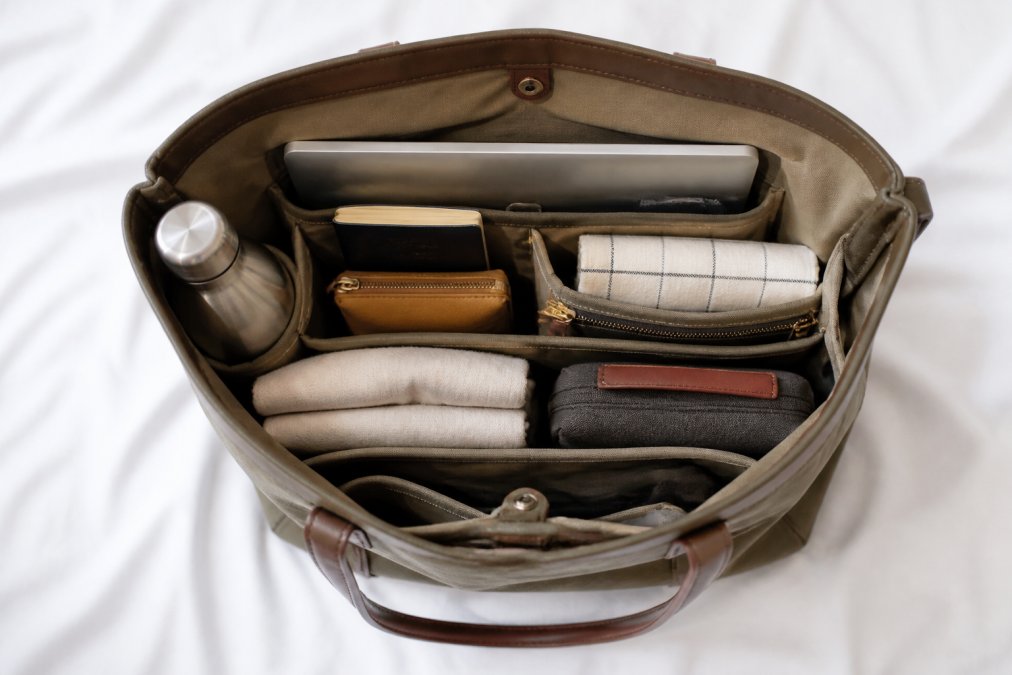
Packing cubes and small zipper pouches are the practical tool that makes this system work. A single medium packing cube for cables and tech accessories eliminates the rat's nest at the bottom of most travel totes.
Ergonomic Weight Distribution and Strap Design
Ergonomic weight distribution in a tote bag is the difference between a bag you can carry for four hours and one that causes shoulder pain after forty minutes. Totes distribute weight differently than backpacks, and most buyers don't think about this until they're already sore.
The key variables are strap width, strap padding, and handle drop length:
- Strap width: Wider straps (40mm+) distribute weight across more shoulder surface area. Narrow straps concentrate pressure on a single point and cause fatigue faster.
- Strap padding: Padding matters most for bags over 5kg. Below that, it's a comfort bonus rather than a necessity.
- Handle drop: A 10-12 inch drop fits comfortably over the shoulder. Shorter drops force you to carry the bag in the crook of your arm, which fatigues faster.
A common design flaw in travel totes is straps that are long enough to wear over the shoulder but not long enough to wear across the body as a crossbody bag. Crossbody carry distributes weight across the torso rather than concentrating it on one shoulder, which is significantly more comfortable for long distances.
As noted in ergonomic guidelines for bag carrying from the American Physical Therapy Association, carrying bags that exceed 10% of body weight on a single shoulder consistently contributes to postural imbalance and shoulder strain over time.
For daily travelers covering significant distances on foot, the strap system is as important as the bag's storage capacity.
Tote Bag Maintenance and Cleaning Tips
Tote bag maintenance and cleaning tips vary significantly by material. The fastest way to destroy a quality bag is to clean it incorrectly.
Nylon totes: Spot clean with a damp cloth and mild soap. Machine washing is generally safe on a gentle cycle in a mesh laundry bag, but avoid hot water, which degrades water-resistant coatings. Air dry flat; never put nylon in a dryer.
Canvas totes: Spot clean for most stains. For deep cleaning, hand wash in cool water with a gentle detergent. Waxed canvas should never be machine washed; it strips the wax coating. Re-waxing annually maintains water resistance.
Polyester totes: The most forgiving material for cleaning. Machine wash on a gentle cycle, cold water, and air dry. Polyester holds shape well through washing, which is one reason it's common in everyday carry bags.
General maintenance habits that extend bag life:
- Empty the bag completely before storing it. Weight left in a stored bag stresses handle attachment points over time.
- Store totes stuffed with tissue paper or a small pillow to maintain shape, especially structured bags.
- Address zipper issues early. A zipper that's starting to stick can be fixed with a wax pencil or zipper lubricant. Ignoring it leads to a split zipper that often can't be repaired.
- Check handle stitching every few months. Catching a loose thread early prevents full handle detachment.
Repairability and sustainability are angles most buyers overlook entirely. A bag with bar-tacked handles and YKK zippers can be repaired by any competent leather or bag repair shop. A bag with glued construction and proprietary hardware often can't be repaired at all, which means a single failure turns a $150 bag into landfill.
Choosing a repairable bag is a sustainability decision as much as a financial one. The most durable tote bags for daily travel are the ones you can fix, not just replace.
Frequently Asked Questions
What features make a tote bag durable for daily travel?
Durability comes from the combination of material, construction, and hardware. Look for tightly woven nylon or polyester with reinforced stitching at stress points like handle attachment and zipper seams. Metal or high-grade plastic zippers outlast cheap ones. A water-resistant lining protects contents from spills. Bags with a structured base hold their shape longer than fully slouchy designs, which tend to sag and pull at seams over time.
How do I choose a travel tote that fits under an airplane seat?
Most airlines allow a personal item up to roughly 45 x 35 x 20 cm, though this varies by carrier. Check your specific airline's personal item policy before flying, as budget carriers enforce limits more strictly. A tote with a semi-structured shape compresses more easily than a rigid bag. Avoid overpacking, a bag that technically fits the dimensions can still be rejected if it looks stuffed. A trolley pass-through sleeve also helps when you're managing both a carry-on and a personal item.
Are canvas or nylon tote bags better for daily commuting?
Nylon generally wins for daily commuting. It is lighter, more water-resistant, and easier to wipe clean than canvas. Canvas looks better with age and suits a more casual or aesthetic-first style, but it absorbs moisture and stains more readily. For a bag that takes daily wear, packed laptops, gym gear, grocery runs, nylon or coated polyester holds up with less maintenance. Canvas is a solid pick if you treat it with a fabric protector and keep loads moderate.
How do I keep a travel tote clean over time?
Spot-clean polyester and nylon totes with a damp cloth and mild soap after each heavy use. For canvas, a soft brush removes dry debris before any wet cleaning. Avoid machine washing bags with structured inserts or metal hardware, the agitation weakens stitching and warps frames. Air-dry completely before storing to prevent mildew. Turning the bag inside out periodically lets you clear crumbs and dust from interior pockets, which extends both hygiene and the life of the lining.
Daily travel puts real demands on a bag, and most options on the market aren't built to handle them long-term. The right tote combines material quality, smart organization, airline-compliant dimensions, and ergonomic strap design. Munk'Goods carries a curated selection of travel-ready bags, including the lightweight Cute Mole Cartoon Tote Bag for everyday use. Browse the full Munk'Goods collection and find the bag that fits your actual travel habits.
This article was written using GrandRanker