
Table of Contents
- Bohemian vs Minimalist Interior Design: Core Differences
- Color Palettes and Visual Atmosphere
- Boho Living Room Ideas vs Minimalist Living Room Ideas
- Furniture, Textures, and Materials
- Patterns, Prints, and Decorative Accessories
- Boho Minimalist Interior Design: Creating a Hybrid Approach
- Modern vs Minimalist Interior Design: Understanding the Distinction
- Which Style Should You Choose? A Decision Framework
- Frequently Asked Questions
Last Updated: October 19, 2026
Bohemian vs Minimalist Interior Design: Core Differences
Choosing between bohemian and minimalist interior design styles means deciding between two opposite philosophies about how to fill your space. Bohemian design celebrates abundance, layering, and personal expression through collected pieces and bold colors. Minimalist design strips away excess and prioritizes function, clean lines, and intentional emptiness.
At Munk'Goods, we help homeowners navigate these design choices with curated products that support whatever aesthetic direction you choose. Understanding the core differences between bohemian vs minimalist interior design styles isn't about picking a "winner", it's about recognizing which philosophy aligns with how you actually live.
What Defines Bohemian Style
Bohemian style is maximalist by nature. It celebrates collected character, layered textures, and an eclectic mix of patterns, colors, and materials that tell a personal story.
Key characteristics include warm, saturated color palettes (terracotta, deep jewel tones, warm neutrals), abundant natural textures (wood, rattan, woven materials), mixed patterns that overlap without apology, and decorative accessories displayed openly rather than hidden away. Plants are essential.
Bohemian style works especially well for people who enjoy collecting, want their home to feel like a creative sanctuary, and aren't bothered by visual complexity.
What Defines Minimalist Style
Minimalist interior design is built on the principle of "less is more." It removes everything nonessential, leaving only items that serve a clear function or bring genuine joy. Minimalist spaces feel calm, organized, and intentional.
The minimalist approach emphasizes clean lines, neutral color palettes (whites, grays, blacks, soft beiges), functional furniture with simple silhouettes, and negative space, the empty areas that make a room feel breathable.
Minimalism appeals to people who find visual clutter stressful, value function over decoration, and want their home to feel like a calm retreat. It's particularly practical for small spaces and busy schedules.
Color Palettes and Visual Atmosphere
The color story is where these two styles diverge most dramatically. Your color choices will shape the entire emotional tone of your home.
Bohemian Color Choices
Bohemian design embraces bold, warm, and saturated colors: terracotta, burnt orange, deep jewel tones (emerald, sapphire, amethyst), warm mustard, rust, and rich burgundy.
Warm neutrals like cream, tan, and warm gray provide a base, but they're never the main event. Lighting tends toward warm, soft sources (candles, warm bulbs) that enhance the cozy, intimate feeling.
This approach works well if you want your space to feel vibrant and welcoming, if you're drawn to global or eclectic aesthetics, or if bold color energizes rather than overwhelms you.
Minimalist Color Choices
Minimalist design relies on a restrained, neutral palette: whites, soft grays, blacks, warm beiges, and pale natural tones.
The atmosphere is calm, clean, and focused, with bright natural lighting that emphasizes clarity and openness. A minimalist room might feature white walls, light gray furniture, and one carefully chosen piece of black or natural wood, nothing more.
This approach works well if you find busy color palettes stressful, if you want your space to feel larger and more open, or if you prefer a neutral backdrop that lets natural light and form take center stage.
Boho Living Room Ideas vs Minimalist Living Room Ideas
The living room is where these design philosophies become most visible and most livable. Here's how each style approaches this central gathering space.
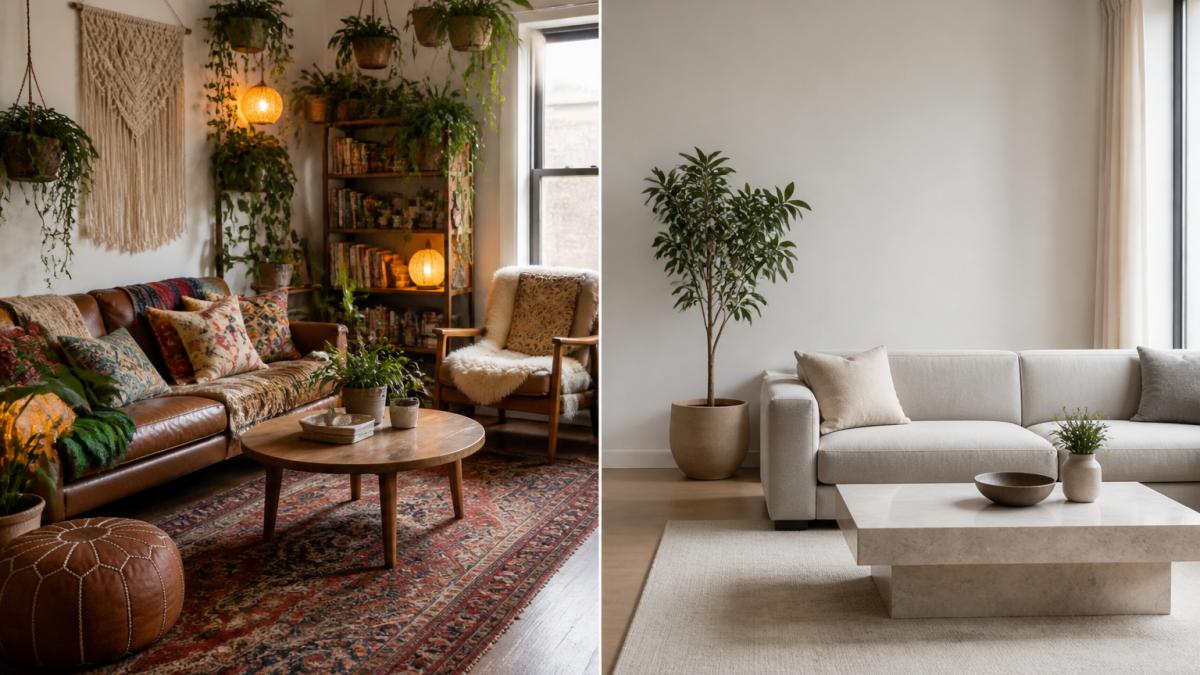
Bohemian Living Room Layout and Styling
A bohemian living room invites you to layer and collect. Add plants at different heights, hang a woven wall tapestry or macrame piece as a focal point, and display collected items on shelves and surfaces.

The layout feels organic rather than symmetrical: pieces cluster to create intimate conversation areas, and lighting comes from multiple sources, table lamps, floor lamps, candles, string lights.
Products like the Bohemian Woven Wall Tapestry (priced at $35.64) work perfectly here as a focal point that adds texture and artistic character without requiring additional wall decor. Pair it with the Home Decoration Bohemian Macrame ($29.65) on another wall to layer visual interest.

Minimalist Living Room Layout and Styling
A minimalist living room prioritizes function and breathing room. Choose one quality sofa with clean lines and neutral upholstery, add only essential pieces like a simple coffee table, and leave wall space empty. If you display anything, choose one or two carefully curated items. Storage is built-in or hidden; surfaces stay clear.
Furniture is arranged with purpose, not clutter, and lighting is minimal and functional. The room feels spacious and calm, even if it's physically small.
The Minimalist Porcelain Decorative Vase ($27.16) serves as a perfect accent here, a single, beautifully designed object that doesn't require companions or styling.

Furniture, Textures, and Materials
What you put in your room and what it's made of will determine whether your space feels bohemian or minimalist.
Bohemian Furniture and Natural Textures
Bohemian design celebrates natural materials and mixed finishes: wooden furniture with visible grain, rattan chairs, woven baskets, ceramic pieces, and textiles in cotton, linen, and wool. Vintage and antique pieces are prized for their character, and a weathered wooden table sits comfortably next to a modern chair.
Textures layer heavily, smooth ceramics next to rough woven textiles, shiny brass next to matte wood, creating visual interest and tactile richness.
Minimalist Furniture and Clean Finishes
Minimalist design favors simple, functional furniture with clean lines and smooth finishes in polished wood, metal, glass, or concrete. Each piece serves a clear purpose, ornate details are absent, and finishes are consistent and refined rather than mixed and textured.
The goal is for furniture to disappear into the background, supporting the room's function without drawing attention. Quality matters more than quantity; one well-made minimalist chair beats five ornate ones.
Patterns, Prints, and Decorative Accessories
This is where personal expression becomes tangible in each style.
Home Decoration Bohemian Macrame →
Bohemian design embraces bold, mixed patterns: paisley pairs with geometric prints, stripes meet florals, and patterns overlap on pillows, rugs, textiles, and walls. Decorative accessories are displayed openly and abundantly, ceramics, books, hanging textiles, artwork, trinkets. Nothing is hidden away.
Minimalist design either avoids patterns entirely or uses them very sparingly, perhaps one geometric area rug or a single patterned throw pillow as a subtle accent. Decorative accessories are minimal: maybe one vase, one plant, one piece of art.
Boho Minimalist Interior Design: Creating a Hybrid Approach
Pure bohemian or pure minimalist doesn't work for everyone. Many homeowners are drawn to elements of both styles, and a hybrid approach is increasingly popular.
How to Blend Styles Successfully
The key to blending bohemian and minimalist design is intentionality.
The difference between this hybrid and pure bohemian is restraint: you add bohemian elements deliberately rather than filling every surface. A boho minimalist room might have a warm neutral palette with one accent color, a few layered textiles, and plants, but surfaces stay relatively clear.
This approach captures what's best about both styles: the calm, functional foundation of minimalism with the warmth and personality of bohemian design.
Room-by-Room Hybrid Styling
Apply this hybrid thinking differently across your home. In a bedroom, lean more minimalist: a calm neutral palette, simple furniture, limited decorative items.
In a living room, you might go slightly more bohemian: a neutral base with warm wood tones, layered textiles, plants, and a few displayed collections. But keep surfaces clear and functional.
In a home office, stay closer to minimalist principles: clean desk, minimal decoration, neutral palette. Add warmth through natural materials and one meaningful piece of art.
The Farmhouse Aesthetic Minimalist ($24.07) piece exemplifies this hybrid approach, it combines rustic, warm charm with clean, understated design.
Modern vs Minimalist Interior Design: Understanding the Distinction
Many people confuse "modern" design with "minimalist" design. They're related but different.
Modern design (or contemporary design) emphasizes clean lines, functional forms, and a mix of materials, but it doesn't require minimalism.
Minimalist design is specifically about reduction and intentionality. It's a philosophy about what to remove, not just how to design what remains. All minimalist spaces are modern in aesthetic, but not all modern spaces are minimalist.
Understanding this distinction matters because it means you can embrace modern design principles (clean lines, functional furniture, contemporary materials) without committing to minimalism's strict reduction philosophy.
Which Style Should You Choose? A Decision Framework
Choosing between bohemian and minimalist interior design depends on how you actually live, what stresses you, and what brings you joy.
Lifestyle and Maintenance Considerations
Consider your daily life. Do you collect things naturally, or do you feel burdened by possessions?
Minimalist design is lower-maintenance in some ways: fewer items to clean and organize. But it requires discipline. You can't impulse-buy or hold onto things "just in case." Every item must earn its place.
Ask yourself: Does visual complexity energize or drain you? Bohemian spaces are visually rich and stimulating. Minimalist spaces are calm and restful.
If you're busy and stressed, a minimalist foundation with selective bohemian warmth might be ideal. If you enjoy styling and curating, bohemian design feeds that creative impulse.
Budget and Sourcing Approach
Bohemian design can be budget-friendly because it celebrates vintage, thrifted, and mixed-quality pieces. You can build a beautiful boho room gradually, finding pieces at markets, secondhand shops, and sales.
Minimalist design often requires investment in fewer, higher-quality pieces. Each item matters more because the room has less visual noise. A minimalist sofa needs to be genuinely beautiful and well-made because there's nothing to distract from it.
| Design Style | Budget Approach | Sourcing Strategy | Timeline |
|---|---|---|---|
| Bohemian | Lower upfront, gradual building | Thrift stores, markets, sales, mixed sources | Flexible, evolving |
| Minimalist | Higher upfront, quality focus | Curated retailers, investment pieces | Planned, intentional |
| Hybrid | Moderate, strategic investment | Mix of investment pieces and thrifted finds | Gradual refinement |
Start with whichever resonates with your lifestyle, budget, and personality. You can always shift or blend as your needs change.
Choosing your interior design style is deeply personal. From the Bohemian Woven Wall Tapestry that adds warmth and texture to the Nordic Vintage Home Decor Minimalist piece that brings understated elegance, our collection helps you build a home that reflects your aesthetic. Explore our curated selection today and find the pieces that turn your design vision into reality. Continue shopping with Munk'Goods.
Frequently Asked Questions
Can you combine bohemian and minimalist styles in one home?
Yes. Boho minimalist interior design blends the two by pairing bohemian texture and warmth with minimalist simplicity and order. Start with a neutral base (walls, large furniture), add natural materials and plants for boho character, then limit decorative accessories to intentional pieces. This hybrid approach works well in living rooms and bedrooms where you want personality without visual clutter. The Home Decoration Bohemian Macrame ($29.65) pairs beautifully with minimalist spaces, adding handcrafted warmth while maintaining clean sight lines.
What is the main difference between bohemian and minimalist interior design?
Bohemian design celebrates creative expression, layering, mixed patterns, and collected character through textiles, plants, and vintage finds. Minimalist design prioritizes simplicity, clean lines, negative space, and functional furniture. Bohemian embraces visual richness; minimalist reduces it. Both can use natural materials and neutral tones, but bohemian adds bold colors and patterns while minimalist strips them away. Your choice depends on whether you prefer a relaxed, expressive atmosphere or a calm, ordered one.
Which interior design style is easier to maintain?
Minimalist interiors are generally easier to maintain. Fewer decorative items mean less dusting, fewer textiles to clean, and simpler surfaces to organize. Bohemian spaces require regular care for plants, textile upkeep, and managing layered accessories. However, minimalist requires discipline to keep spaces uncluttered over time. If you prefer low-maintenance décor, minimalist works better. If you enjoy styling and refreshing your space frequently, bohemian's flexibility may suit you despite higher upkeep.
How do you decorate a minimalist room without making it feel cold?
Add warmth through natural materials, soft lighting, and selective texture. Use wooden furniture, ceramic accents like the Minimalist Porcelain Decorative Vase ($27.16), and neutral textiles in linen or wool. Include plants for life and color. Layer lighting with warm-toned bulbs and soft shadows. Choose one or two meaningful decorative pieces rather than filling shelves. The Nordic Vintage Home Decor Minimalist ($51.11) brings subtle vintage charm without clutter. Focus on quality over quantity, fewer, carefully chosen items create an inviting rather than sterile space.